


COLONY ARCHIVE NODE 7 — KEPLER SYSTEM DOCUMENT CLASSIFICATION: PERSONAL CORRESPONDENCE RECEIVED: Year 0, Day 44 (relay-delayed) SENDER: Lagos Auxiliary Broadcast Station C, Earth SENDER STATUS: UNKNOWN
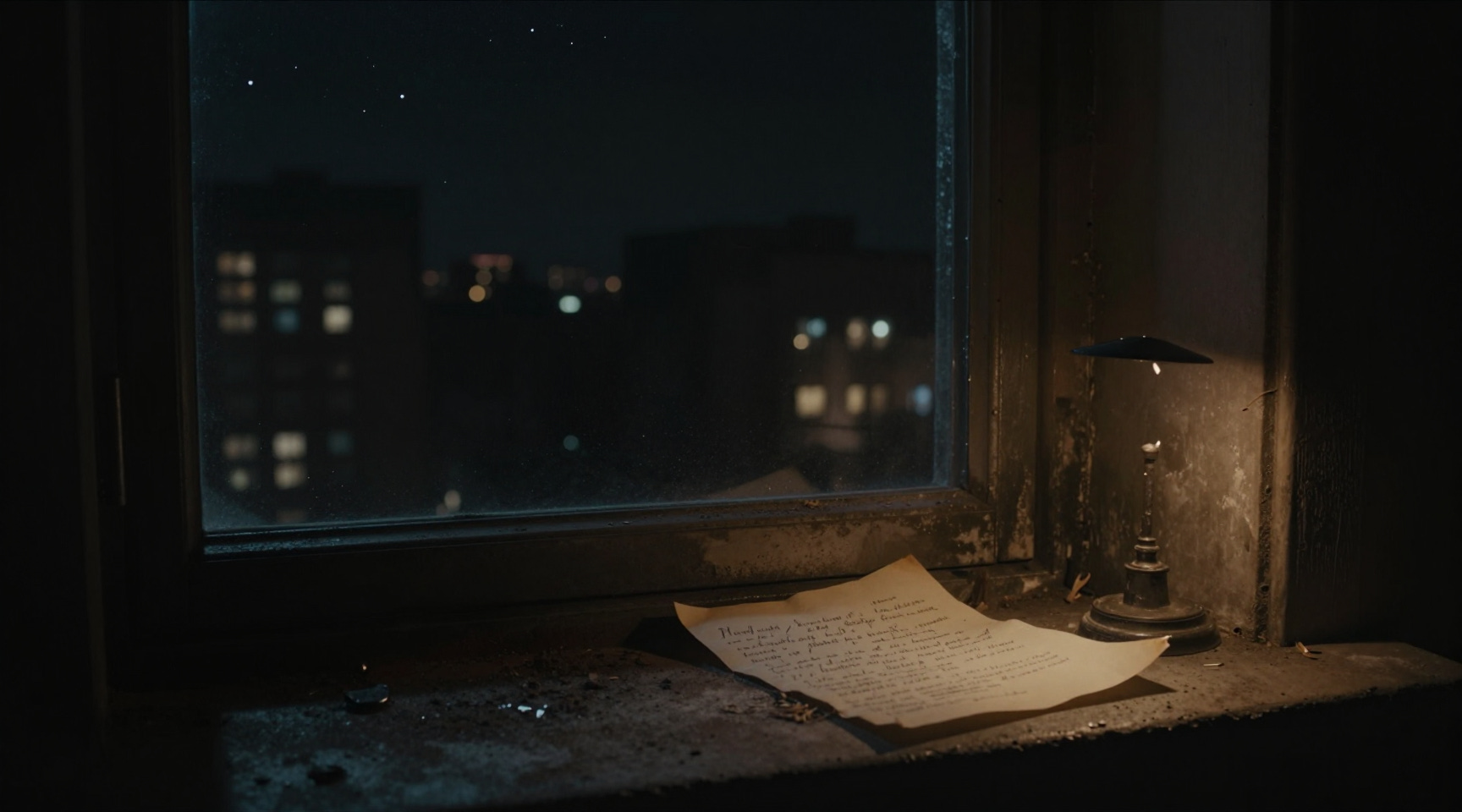
Year 0, Day 42 Lagos
Chiamaka —
You are probably receiving this weeks after I send it, or never. The civilian broadcast windows are irregular now. The technician at the station says we get forty minutes every three days if the antenna holds and nothing passes overhead at the wrong moment. I am writing this by hand and will read it aloud when the window opens. If you are hearing my voice, that means I made it to Day 42.
I want you to know some things in case the windows stop.
There are thirty-one of us sheltering in the commerce building on Bode Thomas Street. You know the one, you used to complain that the stairwells smelled like mold and old paper. They still do. We have perhaps ninety days of food if we are careful, more if the next supply run goes well. Three people went out yesterday and came back with water purification equipment from the hardware depot four blocks east. We take turns on the night watch. Nobody argues about it. That surprised me.
I am well. I have a small room on the fourth floor with a window that faces north. A section of sky is visible from it if I stand at the right angle. The nights are clear here now. I have been looking at stars more than I ever did before, trying to find the ones that might be yours.
I want to tell you something about Mama that I never said while she was alive. After Papa died, when we were in secondary school and she took on the extra tutoring to keep us in uniforms, I used to resent how tired she was when she came home. I thought she was choosing the students over us. I was wrong and I knew it even then, but I was young and angry and I never told her I understood. I am telling you now because I need it to go somewhere. She chose us every day. The tiredness was proof of it.
Keep that, if you can.
There is also the matter of the tin box under the floorboard in her old room, if the house is still standing, which it may not be. Grandmother’s jewelry. The gold chain with the red glass bead. If you are ever able to go back for anything, go back for that.
I think about ordinary things more than I expected. I think about the jollof rice from the stall near our bus stop, the woman who always burned the bottom layer just slightly, which was the best part. I think about the sound the market made on Sunday mornings before the vendors set up, when everything was quiet and smelled like wet ground. I think about the particular way afternoon light came through our living room window in December and made a stripe across the floor that the cat would sleep in until it moved.
I am not sure why I am telling you this. Perhaps because the people here talk mostly about practical things, which makes sense, and I need somewhere to put the impractical things. You always kept the impractical things I gave you. You kept the bad poems I wrote in Form Three. You kept the photograph I took of my feet at the beach that one time, the one that came out badly because I was still learning the camera. You kept things on my behalf when I could not keep them myself.
Keep these too, if you receive them.
Things here are difficult in the ways you can imagine and some ways you cannot. I will not describe the ways you cannot because there is no point, and I want this letter to arrive at you clean. What I will say is that the thirty-one people in this building are, in the main, good. Farida on the second floor is a retired schoolteacher. She has started informal lessons for the three children with us, which is either practical or impractical depending on how you look at it. I think it is both. I think that is the point.
The antenna window opens at 0300. I will read this then.
I do not know what comes next. I am not sure it matters that I know. What I know is that you are somewhere I cannot reach, which I hope means you are somewhere safe. I know that Mama’s chain is in the tin under the floorboard. I know that the jollof rice near our bus stop had the best bottom layer in Lagos. I know that you kept my bad poems and the photograph of my feet, and I know what that means.
Take care of yourself, Chiamaka. Tell the children something true about where they came from. Make sure they know the name of the woman with the jollof rice stall, even if the stall is gone. These things matter. I believe they are what we are transmitting, underneath all the other frequencies.
The window opens in an hour. I am going to sleep for a little while first.
I love you. Receive this and know I sent it.
Nneka
Authors Note: This letter arrived at Colony Archive Node 7 in the Kepler System on Year 0, Day 44. It was stored alongside 4,702 other received personal transmissions from that period. Nneka Anyanwu does not appear in any subsequent transmission log from Lagos Auxiliary Broadcast Station C or any other Earth broadcast facility. No status record was located.
In Year 3, the colony archive catalogued all received Year 0 transmissions under the Earth Documentation Initiative. The process took eleven months. Most of the letters remain unread.
If you enjoyed this story, you can follow the main story arc in The Exodus Rush, the first book in The Vethrak Requiem series.