


The numbers had survived six revisions.
Three hundred sixty pascals remained three hundred sixty. The five-millimeter brace drift still measured five millimeters. The shutdown command still carried the same time and the same authorization code.
Everything around the numbers had been cut away.
Sigrid Hedlund anchored one boot beneath the communications-office rail and opened the packet’s revision history. Version two removed the internal comment beside the filter deferral. Version three removed the credential trail. Version four replaced the original outage authorization with a summary sentence. Version five dropped the recovered brace image because counsel called it duplicative.
Version six preserved every measurement and explained none of them.
The legal reviewer waited on the wall display. “The record remains accurate.”
“Accurate to what?”
“Every released figure matches the underlying file. Patient information is excluded. Unverified attribution is excluded. Privileged internal discussion is excluded.”
The packet on Sigrid’s slate looked clean enough to survive a hearing and empty enough to survive nothing else.
She returned to version one.
Kavita Nair clipped a second slate to the rail beside hers. The organizer had marked seven proposed redactions. Six carried the same note: institutional embarrassment is not privacy. The seventh covered names, bed assignments, clinical measurements, and individual treatment notes from Dr. Molefe’s patient records.
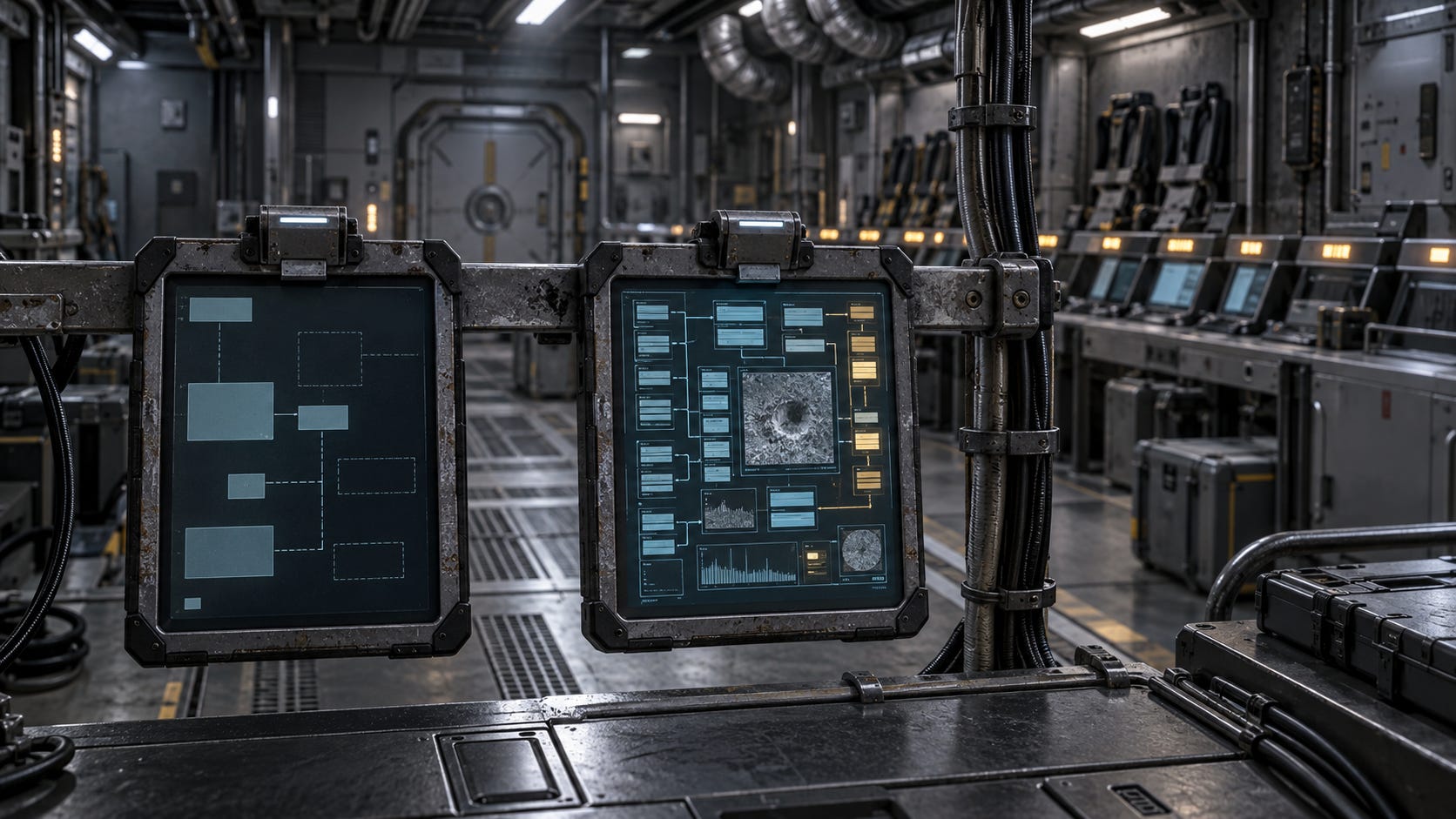
“This one stays,” Kavita said, touching the medical block. “Patients did not consent to become evidence for either side.”
She opened the filter-deferral comment. A procurement supervisor had warned that the replacement date would leave Bank D below planned reserve if dust loading rose. Counsel’s redaction marked the warning as deliberative.
“This one goes back,” Kavita said. “It explains what the approval accepted.”
The legal reviewer leaned toward the camera. “You are not the disclosure authority.”
“No.” Kavita looked at Sigrid. “She is.”
The communications office had no spin. Slates stayed in clamps, chairs folded into the wall, and every person remained clipped or locked to a rail. Beyond the pressure door, temporary scrubbers drove a low vibration through the deck. The damaged branch remained isolated. The station had air, not margin.
Sigrid restored the filter comment.
Counsel added an objection to the revision log.
“Keep your objection,” Sigrid said. “Do not remove the record it objects to.”
The door cycled. Lena Vasquez entered with dust still caught in the seams of her work cuff. She locked her boots at the rail and read the packet from the beginning. No greeting. No speech.
Sigrid waited while Lena opened the original outage authorization and the replacement summary side by side.
“If this goes out,” Sigrid said, “the strike continues.”
“Yes.”
“The outage remains staged.”
“Yes.”
“No one on your line owes me trust for releasing it.”
Lena moved the original authorization back into the public column. “Next meeting either starts with what happened or starts with us proving it again. That’s all this decides.”
Sigrid had spent seventeen strike days receiving documents designed to end arguments. Every shortened sentence had done the opposite.
She restored the authorization.
The filter deferrals followed. Then the accepted reserve reduction, the postponed brace replacement, and the recovered inspection image with its timestamp and synchronization history. She returned the operations-security credential trail to the packet, including the delegated function, its authorization scope, the hold interval, and the image exclusion.
Each restored page changed the meaning of the page before it. The filter number no longer described equipment that had failed without warning. It sat beside a postponed replacement and an operations approval accepting less reserve. The brace image no longer duplicated a current photograph. Its clean washer crescent and earlier timestamp showed movement before the strike. The shutdown authorization no longer appeared as a technical event without an author. It carried a delegated command path into a system already short of margin.
Sigrid opened the production-review history last. Her morning board had received Ji-woo Han’s signed instruction as an advisory. Sigrid’s own extraction authorization remained below it, complete with the conditions she had trusted to contain the risk. Counsel had not proposed changing either signature. The safe packet kept both and removed the version trail between them.
“Restore the original hold language,” Sigrid said.
The legal reviewer shook his head. “This release concerns the air emergency.”
“The packet claims to explain why the station had no margin. Our habit of shortening warnings is part of that explanation.”
Kavita opened Molefe’s system-level annex reference without opening a patient chart. “Medical’s operational finding stays. Individual records stay sealed.”
Sigrid added the annex reference, its signed finding, and its custody location. No names. No bed numbers. Anyone reviewing the chain could verify that the dissent existed and request it through the regulated process. Nobody browsing a station terminal could read a patient’s blood result.
The packet grew by thirty-eight pages.
Its numbers did not change.
A message arrived from the strike review channel. The duty roster for that office is limited. Publish the likely user.
Counsel opened a different message from Helios regional review. Remove the credential trail until individual authorization is determined.
Both requests wanted the same thing from opposite directions. Each wanted uncertainty cut away.
Sigrid opened the cover memorandum.
The first draft said the release contained all verified materials relevant to the emergency. She deleted all. Molefe’s patient records remained protected. The packet also excluded private contact information and unrelated personnel files. Precision required naming the boundary.
She typed:
The released record establishes that an operations-security review function used delegated authority to restrict the access log and exclude the structural image from routine review. It does not establish the identity of the individual operating that credential or the individual who transmitted shutdown command RC-7316. No personal name is included on inference alone.
The legal reviewer read the paragraph in silence.
Sigrid added a second one.
Patient privacy protects the person. Redaction does not protect an institution from the documented consequences of its decisions. Operational comments, authorization histories, maintenance deferrals, dissenting technical findings, and original command records are included where they establish what risk was known, accepted, changed, or withheld.
“That sentence creates exposure,” counsel said.
“The decisions created exposure. The sentence preserves it.”
She signed the memorandum: Hedlund, S. Operations Director, Helios Ceres.
The release control offered three destinations. Regulatory archive. Joint bargaining record. Station public system. Sigrid selected all three.
A legal-hold notice opened before transmission. It required preservation of the source logs, version histories, local reader, original image, command receipts, access records, and every release-packet revision. The notice provided a field for authorizing counsel.
Counsel did not fill it.
Sigrid changed the authorizing office to Ceres Operations and signed it herself.
“You may not have authority to bind regional systems,” the reviewer said.
“Then regional can challenge the scope without touching the Ceres originals.”
She sent the hold first.
Confirmation returned from the local archive, then the independent station repository. The regional receipt remained pending.
Sigrid sent the packet.
No alarm sounded. No one in the office applauded. The temporary scrubbers kept their low rhythm beneath the deck.
The first station receipt appeared on the communications board. Then another. Terminals in medical, cargo, habitat, environmental control, the Helios ring, and the anchored strike line accepted the same checksum.
Lena stood beside her, one glove resting against the rail. Sigrid did not ask what came next. Strike Day Seventeen had not moved because one director finally released a file.
Across Ceres, the record opened without a safer version beside it.
If you enjoyed this story, you can follow the main story arc in The Exodus Rush, the first book in The Vethrak Requiem series.