


The intelligence analysis chamber on Station Kresh-Var was not designed for species that processed information sequentially. There were no screens arranged in a single viewing arc, no displays oriented toward a stationary occupant who would read them in order. The chamber was layered: data streams flowing across every surface simultaneously, each one carrying a different category of information in a format designed for a mind that could hold multiple parallel inputs without losing the thread.
Vreth-Nak stood at the center of the chamber surrounded by 147 years of accumulated intelligence, and the data did not match.
The Tau Ceti engagement had occurred. The alliance military outcome was known: the Keraneth fleet and their human adjuncts had engaged a Vethrak task force and survived the encounter. Tactical analysis had been completed, casualty reports filed, operational lessons catalogued. That was the initial assessment, distributed to the command council within three cycles of the data arriving at Kresh-Var.
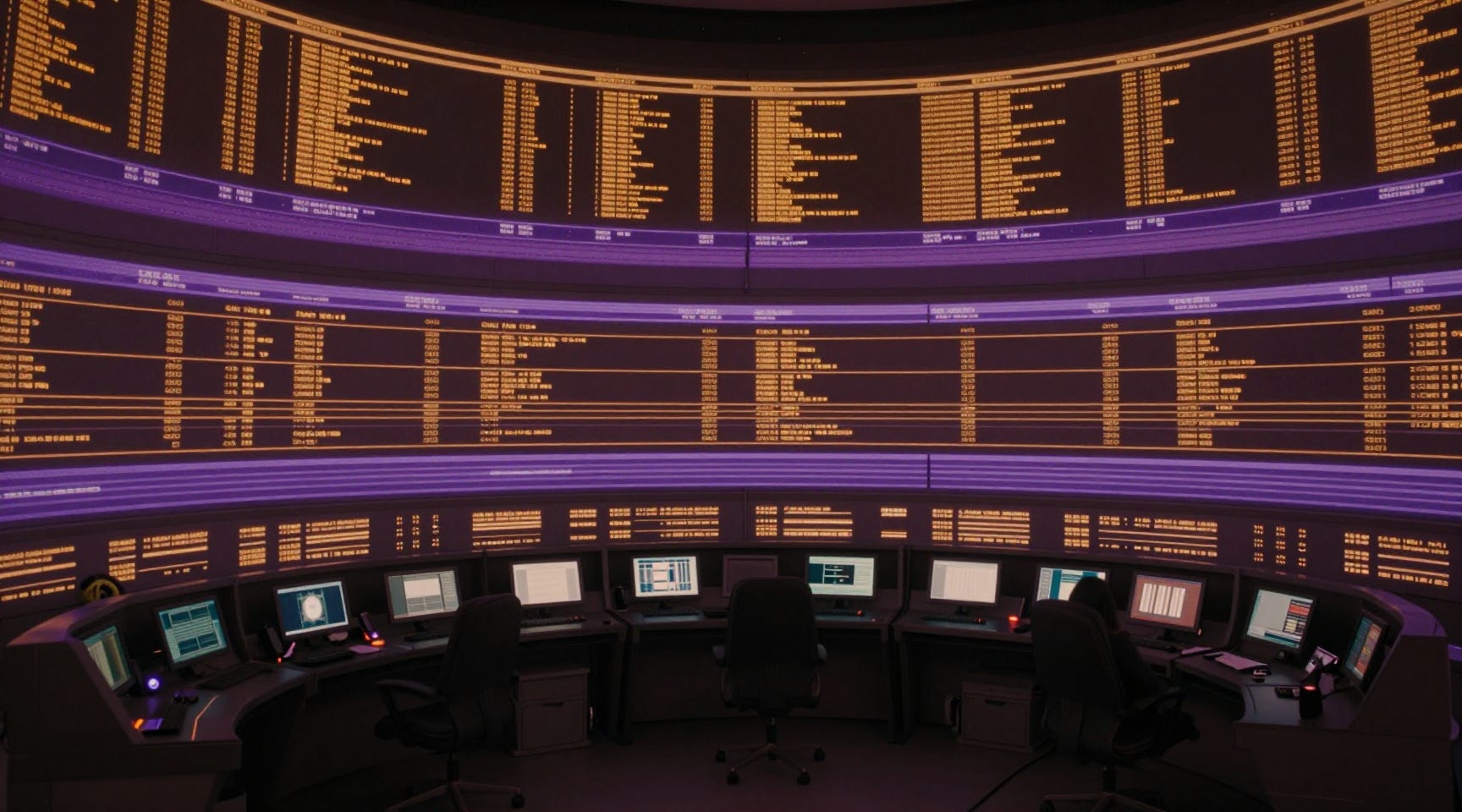
This was not the initial assessment. This was the sensor log comparison.
Vreth-Nak had requested the raw Keraneth and human sensor data from the engagement, not the summarized reports. The Keraneth had provided their full sensor archive without restriction. The humans had done the same, through the Keraneth diplomatic relay. The two records covered the same engagement, the same space, the same temporal interval.
They described different battles.
The Keraneth sensor logs showed a standard engagement: the task force approaching the contact coordinates, the Vethrak response, the exchange of fire, the withdrawal. The sensor picture was consistent with established Keraneth capability. The probe-hunt phase of the operation showed the Keraneth detection grid covering the expected search volume and returning the expected result: no contacts of interest in the space between the engagement zone and the inner system.
The human sensor logs showed forty-seven probe signatures in that same volume.
Vreth-Nak reviewed the discrepancy across multiple data types. Electromagnetic. Gravitational. Fold-space residual. The human logs registered probe signatures across all three spectra. The Keraneth systems had registered empty space. The probes had been present for the entire duration of the operation. They had been present, by inference from the human records of their deployment pattern, for the entire eight hundred years of the Keraneth preparation.
The Vethrak had been watching Tau Ceti the whole time. The Keraneth had never seen them.
Vreth-Nak stood in the layered light of the analysis chamber and recalculated.
The implication was not subtle. If the Vethrak had deployed surveillance technology that exceeded the Skarreth detection threshold, then Vreth-Nak’s accumulated data on Vethrak operational patterns was built on an incomplete picture. Every patrol timing analysis. Every sensor coverage gap map. Every approach corridor that had been validated against the known Vethrak sensor baseline. All of it was accurate only if the Vethrak had not deployed superior detection systems in sectors where Skarreth operations were active.
There was no way to know whether they had.
Vreth-Nak did not experience this as alarm. Alarm was not a useful response to a data gap. The response was recalibration: a systematic re-evaluation of the intelligence framework, starting with the assumptions that now required revision.
The first was the concealment doctrine’s validation basis. Every Skarreth strike vessel that had approached a Vethrak target and returned had done so against the known sensor baseline. If the baseline was incomplete, the validation was incomplete. Success did not mean undetected. It meant unengaged. The Vethrak might have observed every Skarreth operation and chosen not to respond.
Vreth-Nak stopped that line of reasoning. It produced a model in which the Vethrak were allowing Skarreth strikes to succeed for reasons unknown. That was a hypothesis. It had no evidentiary support. It would not be incorporated into doctrine without evidence.
The second assumption was the human sensor capability. The Keraneth had allied with the humans for a reason. Vreth-Nak had understood the reason at the strategic level: human sensors could detect what Keraneth sensors could not, and the alliance was built on that complementarity. The actual magnitude of the gap was now visible in the raw data. The humans could see frequencies the Skarreth could not. They could detect probes that had been present for eight centuries and invisible to every other sensor system in the theater. The Skarreth had been operating in the same space, under the same surveillance, without knowing. The whole history of the resistance might have been visible to the Vethrak the entire time.
The third implication was the most consequential. If Vreth-Nak’s intelligence framework required revision, the revision timeline was measured in months. Every operation currently planned in the next cycle was based on an assessment that the Vethrak sensor baseline was known and stable. If that assessment was incorrect, the operations themselves were not merely less effective. They were compromised at the planning stage. The task of rebuilding the intelligence framework would take months, and during those months operations would proceed on the existing doctrine because there was no alternative. The Skarreth could not pause the resistance while the data was being re-evaluated.
Vreth-Nak began cataloguing the assumptions that required revision. The list grew as the implications compounded. The sensor gap classification system needed to be re-evaluated from the ground up. The patrol timing database needed cross-referencing against human detection data to determine whether Vethrak schedule anomalies correlated with periods of enhanced surveillance. The approach corridor library needed to be audited against the possibility that every corridor was monitored and strikes were only successful because the Vethrak chose not to respond.
The last assumption was the one that would take the longest to resolve. It was also the simplest to state: the Skarreth did not know what they did not know. They had been operating for 147 years on the premise that their sensors could detect anything in their operational volume. That premise was now invalid.
Vreth-Nak initiated a priority channel to Commander Tcha-Kss.
The message was brief. Skarreth communication protocol did not allow for preamble in operational channels. The content was delivered as compressed data with a single vocalized line.
“Our sensor assessment baseline requires revision. The humans can see frequencies we cannot. I am requesting full access to their detection architecture for comparative analysis.”
No explanation beyond the necessary. No expression of concern or uncertainty. The work began when the message was sent.
Vreth-Nak returned to the layered displays. The human sensor logs were still open, the probe signatures still visible, the discrepancy still unresolved. The analysis chamber cycled its atmosphere, a soft shift in pressure and composition that Vreth-Nak registered without conscious attention. The displays updated with the latest data feed from the Keraneth relay. The data from the human logs did not change.
Vreth-Nak began the systematic re-evaluation. The task could take months. The intelligence framework that had guided 147 years of Skarreth operations needed to be rebuilt from the foundation.
Vreth-Nak found this prospect energizing.
If you enjoyed this story, you can follow the main story arc in The Exodus Rush, the first book in The Vethrak Requiem series.