


Cho could recover the tug window by deleting a waiting interval.
The schedule offered the change without an alarm. Qualification, cutback, repair, examination. Pull the last block left until it touched the weld, and Article Four could still reach the outbound cradle on the old line.
He kept his thumb above the control.
Across construction control, Slip Four’s displaced inspection allocation remained open beside its stock hold. He had signed both. Another shift could inherit the lost time, but it would not acquire more of it.
“That interval belongs to the procedure,” Wanjiku said.
“The procedure isn’t qualified yet.”
“The proposed interval still belongs in its qualification.”
Cho withdrew his hand. The old tug line stayed beyond reach.
He opened the signed finding before the implementation order.
Two acceptable plate histories. One blind category. A common high-heat treatment that had not preserved the worked plate’s required condition. Beside the materials record sat Onur’s finding on the receiving schema, and beside that, the conditional authorization under which construction had continued.
His own schedule had depended on that authorization.
“The replacement record doesn’t close this one,” he said.
Onur secured his slate to the adjoining bracket. “It retains it.”
Cho checked the access limits. Engineering held the process facts required for the work. Source and route remained sealed. A protected join required both current authorities for the same purpose. Oversight’s approval named Site Anvil, not every yard in the Fleet.
He accepted the local implementation scope, then opened receiving.
The first unresolved structural lot offered an old acceptance beside an empty process link. Yesterday that acceptance could have placed it in a work sequence. Today Cho disabled that route. No structural lot could be scheduled until its required attributes were present and verified. Missing limits held the work; a familiar grade did not fill them.
The old receipt remained visible.
“Include the stock already beside Slip Two,” he said.
“Those pieces have their links,” Samrawit replied.
“Then the check will finish.”
He signed the receiving change against the whole local scope. The board lost another patch of green.
At the receiving rack, Cho caught a handhold beside the selected stock’s transfer record. The larger worked blank had already been displaced from Slip Four and positioned near Slip Two. Tuva’s signature named its orientation, not a completed joint.
The qualification layout wanted more material than that selection reserved for the repair.
Samrawit brought the proposed cuts alongside the remaining inventory. One representative joint would consume normalized and worked stock in their documented conditions. Destructive specimens would leave pieces too small for the production repair.
“Use the offcuts from the earlier test,” Cho said.
“They represent the old treatment. Some have already been sectioned. This has to qualify what we propose to build.”
He followed the new layout through the restrained curvature and adjoining material. The convenient narrow piece would make a cheaper specimen. It would not reproduce the restraint beside Article Four’s transition.
“You need the full blank.”
“The representative width. Both conditions. The recorded direction.”
He opened Slip Four’s remaining reservation. Its foreman had already lost the first stock transfer, then the inspection block. There was no harmless column in which to place another loss.
Cho recorded a second priority change, naming qualification consumption separately from production replacement. He retained the original reservation and assigned a recovery action to construction control. He would explain that change himself.
The rack operator read back the local lot references before releasing anything. The crane frame took capture; only then did the rack restraints open.
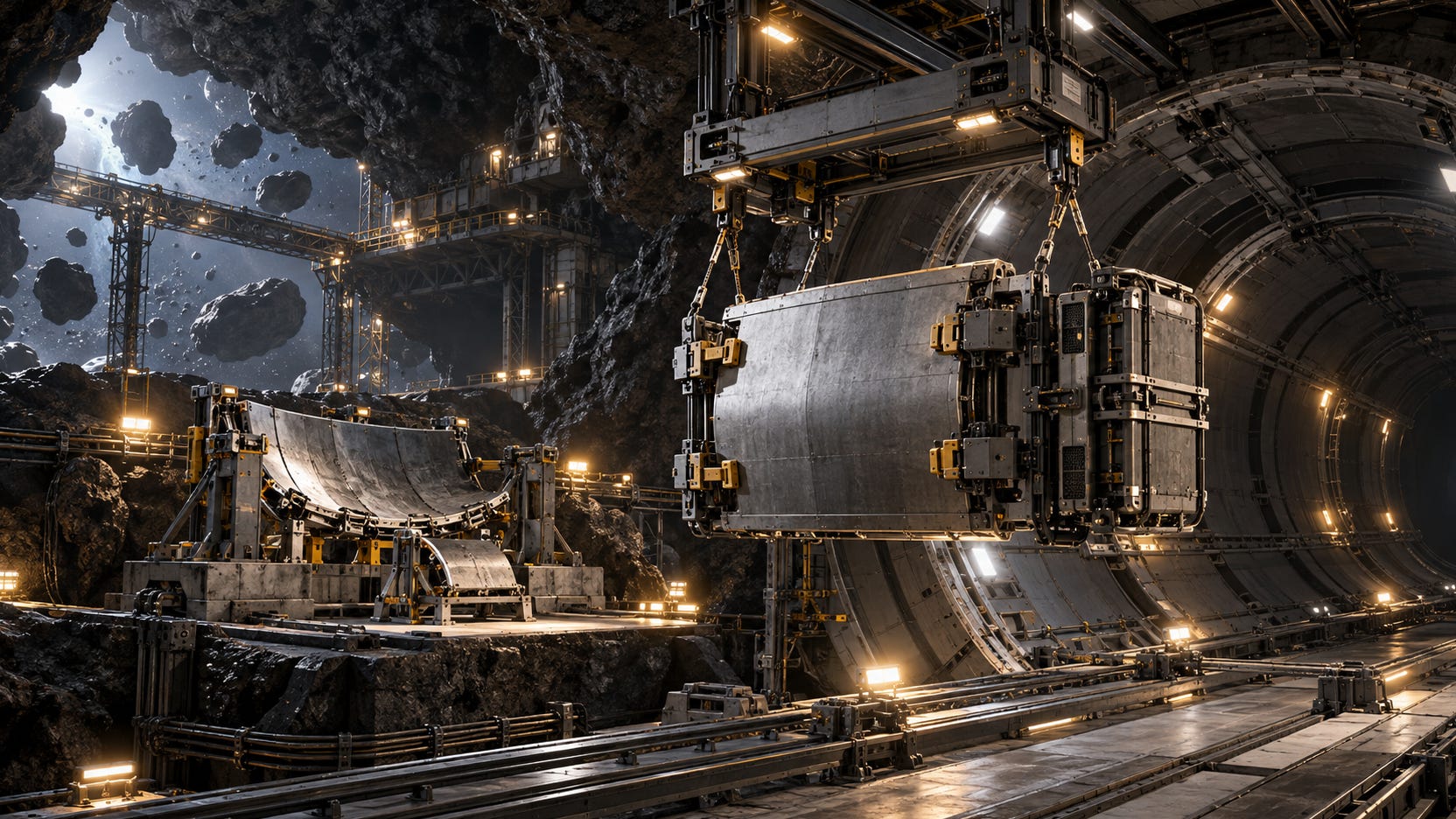
The plate moved without falling. Its inertia reached the rail through Cho’s glove.
Before the new joint was made, Cho met Onur at the protected work station.
Tuva’s builder-roll proposal occupied a narrow pane. Legal identity stayed under compartmentation custody. Construction held the work references, roles, qualifications applicable when each act occurred, scoped signatures and dates. An approved personnel question could join them under its separate two-key purpose. A materials grant could not.
Cho entered construction custody and the required review responsibility. Onur accepted identity custody under oversight’s bounded retention exception.
The medical partition did not open.
“The roll isn’t finally sealed,” Onur said.
“There is still work to sign.”
Cho checked that the old deletion rule had not silently regained control at outbound acceptance. The scoped exception remained attached, with its authority and prior version. He closed his view without asking for a shift roster.
Through the access opening, Tuva waited beside the qualification frame. Her torch stayed captive in its holder until Samrawit finished the material readback.
The corrected joint took a power allocation Cho could no longer give another slip.
He watched from behind the test boundary as Samrawit verified both conditions, working directions, representative geometry and restraint. The proposed heat path had a record before it had a weld. Instrumented temperatures and execution settings would remain with the specimen, including the stops imposed by the available power blocks.
Wanjiku accepted the examination baseline and the test limits. Cho authorized the fixture time, cooling capacity and destructive specimens against that definition, not against a promise to finish before the tug.
Tuva made the joint within the proposed range. When the heating sequence ended, the waiting interval acquired a start time that no schedule control could pull backward.
Cho left the boundary with Article Four still untouched.
He returned after the qualified examination interval, not at the end of his preferred shift.
Wanjiku had retained the initial scans beside the delayed ones. She showed him the registered coverage and reference checks before the disposition. No reportable indication exceeded the defined acceptance criteria. That result belonged to the qualification specimen.
The service-simulating load cycle followed in the anchored frame. Cho held outside the boundary while the actuators brought the curved joint through the authorized sequence and controlled unloading. The acoustic channels stayed within their specified criteria; strain and displacement met the test envelope. After controlled zero and isolation, Wanjiku completed the required comparison.
Samrawit then took the defined destructive specimens. A macro section exposed the joined geometry. The hardness traverse retained position and both parent conditions rather than offering one reassuring average. Bend and tensile specimens met their specified limits.
Cho inspected the remaining sections in their fitted tray. Good steel, cut beyond further use because its answers had to survive the test.
“The procedure?” he asked.
“Qualified within this record’s limits,” Samrawit said.
Wanjiku added her scoped acceptance. “Not a release of Article Four.”
He checked every required result against the definition he had funded. Only after the qualification record closed did he return to the production board.
The revised schedule showed the missed tug windows in their original positions.
Cho left them there. He placed cutback within Wanjiku’s defined transition zones after the qualification closure, followed by controlled rebuilding, its required waiting interval, delayed examination and the barrel’s full staged proof. Outbound scrub, the lifecycle-token return-path test and final release remained separate gates.
No one could call the pilot successful because a test joint had passed.
He issued the schedule with the displaced work and thermal recovery visible. Then he signed authorization for the bounded cutback. The signature permitted the repair work to proceed under its qualified limits; it did not move the transfer hold.
At Slip Two’s entrance, Tuva checked the new order before releasing the tool carrier. A rigger read back the qualified replacement lots and the destination captures. Cho stayed at the rail while the handling frame advanced into the slip, carrying plate, captive tools and the stock it had cost another crew.
The crane took the load. This time the record came with it.
Author’s note: This story follows Foreman Cho in late Year 3 as Site Anvil implements its bounded local records pilot and qualifies a corrected joining procedure on sacrificial hardware. Repair authorization does not mean Article Four has been repaired, proofed, or released.
New to The Vethrak Requiem? Start with The Exodus Rush, Book 1, where humanity fights for survival after an alien invasion using technology it barely understands. These short stories explore the wider universe; the novel begins the main story.