


Oliver Dubois ran his finger along the signal trace, following the spike pattern across three hours of logged data. The console screen threw blue light across his face in the dim communications room. Station Havana’s overnight shift. Population eighteen hundred. Seventeen hundred ninety-nine people asleep.
He pulled up the comparative analysis. Last week’s trace overlaid this week’s. The spikes matched. Not identical, perfectly aligned. Three-point-two milliseconds earlier each day. A drift pattern.
Relay Seven would fail in sixteen hours.
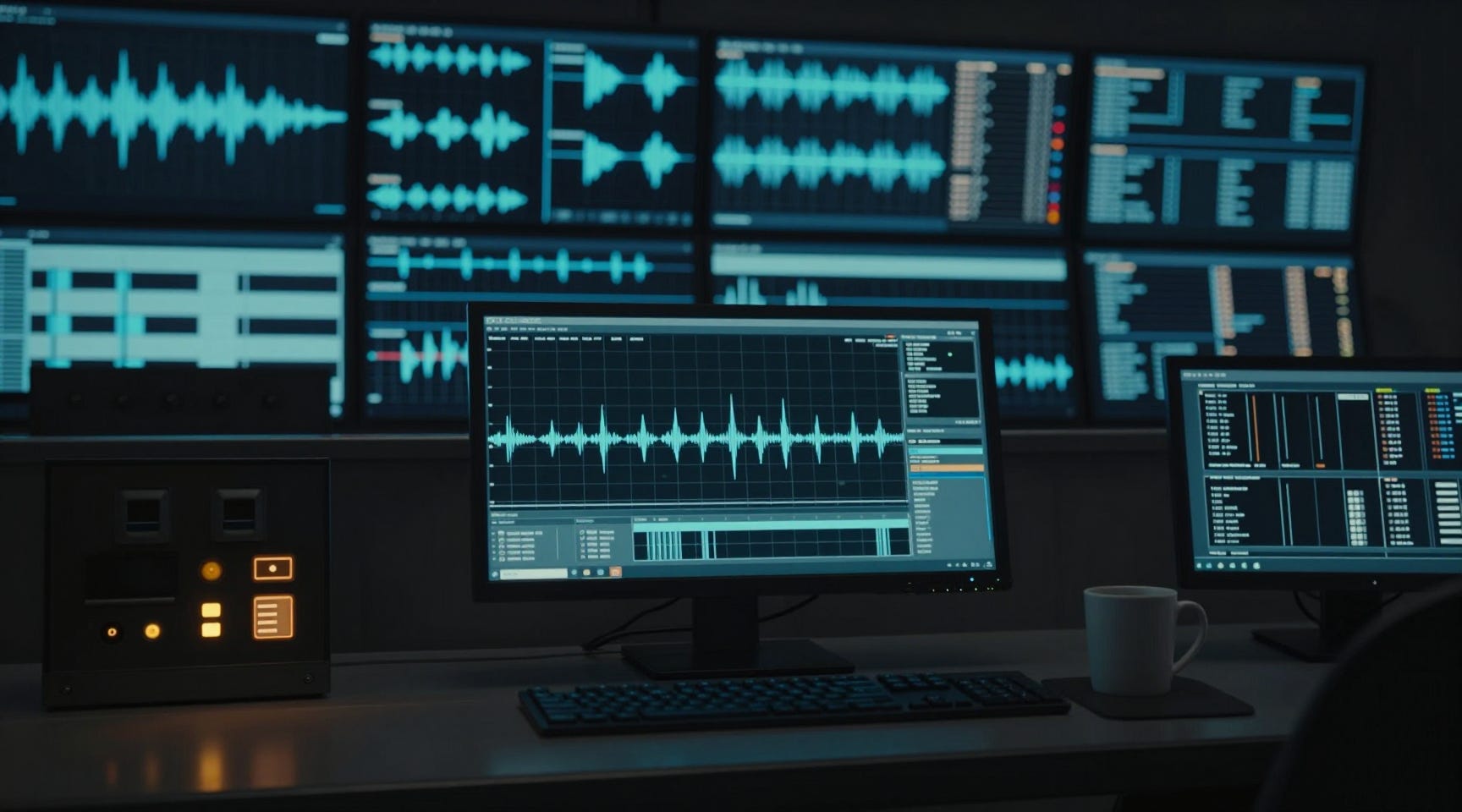
Oliver keyed his headset. “Command, this is CommWatch. I need maintenance authorization for Relay Seven.”
“CommWatch, Command. What’s the fault indicator?”
“No fault yet. Pattern analysis shows degradation consistent with capacitor failure. Sixteen hours until critical.”
Silence on the line. He waited. They always needed convincing.
“CommWatch, Relay Seven passed diagnostics at 1800 hours.”
“Diagnostics measure current function. I’m measuring drift. The spike interval is shortening. It will cascade.”
More silence. Oliver tabbed through his evidence file. Screenshots. Overlay comparisons. Regression analysis. He had learned to document everything. Pattern reading looked like guesswork to people who couldn’t see it.
“Stand by, CommWatch.”
He leaned back in his chair. The communications room smelled like ozone and recycled air. Coffee from four hours ago, grown cold in a steel mug. The hum of active relays surrounded him. Fifty-three separate signals threading through the station, connecting Havana to the seven nearest settlements. Voices, data streams, emergency channels. The invisible web keeping humanity connected.
His screen flickered. Signal degradation on Relay Twelve. Normal variance, nothing critical. He logged it anyway. Three weeks from now, he would pull this data and see the pattern before anyone else did.
“CommWatch, Command. Maintenance approved. Dispatch in six hours at shift change.”
“Negative. The failure will occur at 1400 hours. I need maintenance at 1200 to stay ahead of it.”
“CommWatch, we can’t authorize overtime on a prediction.”
Oliver closed his eyes. Sixteen hours. Relay Seven connected Havana to the northern ag settlements. Three hundred people depending on that link for supply coordination, medical consultation, weather data. When it failed, they would scramble to repair it. Rush the work. Maybe make mistakes.
“Understood, Command. I’ll note it in the log.”
He disconnected. His finger traced the spike pattern again. Three-point-two milliseconds. The math didn’t lie. Physics didn’t negotiate with budget constraints.
The door cycled open. Kira Petrov stepped through, carrying two fresh coffee mugs. She set one beside his elbow.
“They said no?”
“They said wait for the fault.”
“You’re always right about these.”
“Fifth time this month they’ve waited.” He picked up the coffee. Hot. Real coffee, not the synthetic blend. Kira had connections in supply. “Thanks.”
“How long until it goes?”
“Fourteen-hundred hours. Give or take twenty minutes.”
Kira pulled up a secondary console, logging in for her shift overlap. “I’ll file the incident report in advance. Time-stamped. Maybe that’ll convince them next time.”
“Maybe.”
He didn’t believe it. Pattern reading looked like magic. People trusted diagnostic alerts, red lights, alarm klaxons. They trusted things that screamed. A graph with incremental drift didn’t scream. It whispered.
Oliver opened a new analysis window. Relay Seven’s power consumption over the past month. Steady increase. Point-zero-three percent weekly. Another pattern. He documented it, added it to his evidence file. Next time, he would have more data. Next time, they might listen earlier.
“When did you figure this out?” Kira asked. “The pattern reading thing.”
“Year Eight. Station Mendoza. I was watching a relay die in real-time, trying to figure out why diagnostics missed it. Pulled six months of logs. The pattern was right there. Invisible until you knew what to look for.”
“You ever think about teaching it?”
“Who would I teach? Everyone’s too busy keeping things running to study signal theory.” He took another sip of coffee. “It’s fine. I’ll keep catching them.”
“Until you miss one.”
“I won’t miss one.”
The confidence in his voice surprised him. Four years of pattern reading. Ninety-three predictions. Ninety-three successful preventions. The numbers spoke for themselves, even if Command didn’t always listen in time.
His screen chimed. Relay Four showing elevated noise. Normal variance, within tolerance. He logged it anyway. Patterns didn’t announce themselves. They accumulated, one data point at a time, until the shape became clear.
“You should sleep,” Kira said. “Your shift ended two hours ago.”
“After I finish the morning scan.”
“Oliver.”
“I’ll sleep. I just need to finish this.”
She didn’t argue. She understood. Everyone who survived this long understood. You did the work that needed doing. You kept the lights on, the relays running, the communication channels open. Sleep came when it could.
He pulled up Relay Seven one more time. The spike pattern continued its inexorable drift. Three-point-two milliseconds. The universe’s way of saying something was wrong, for anyone who knew how to listen.
Oliver Dubois listened.
He had learned to hear the things that whispered.
Author’s Note
Station Havana, Year 12. The skills humans develop in a post-invasion world aren’t always the ones you’d expect. Oliver Dubois has become fluent in a language most people don’t know exists: the subtle patterns of failing equipment. His quiet competence keeps people connected and alive, one prevented failure at a time.
This story explores the unsung expertise that emerges when humanity must maintain complex systems with limited resources. Pattern reading isn’t magic—it’s attention, experience, and the willingness to see what others miss.
If you enjoyed this story, you can follow the main story arc in The Exodus Rush, the first book in The Vethrak Requiem series.