


Condensation towers hammered like distant drums while Year 11’s shadow frost crawled down the basalt ribs of Persephone Reservoir. Angelica Castillo braced her gloved palm against a trembling guardrail as the recovered Vethrak coil bathing Tank Six in pale green forced humidity past safe margins. The coil never cared about ration plans. It only obeyed physics human engineers still argued about.
Her command slate projected three columns: garrison allocation, refugee ration, fold losses. The Salvage Protocol mandated seventy percent of today’s production for UEN naval staging on Vesta. Redwood Arcology’s request blinked crimson beneath the rest, citing intestinal parasite bloom and ninety hours of potable reserves.
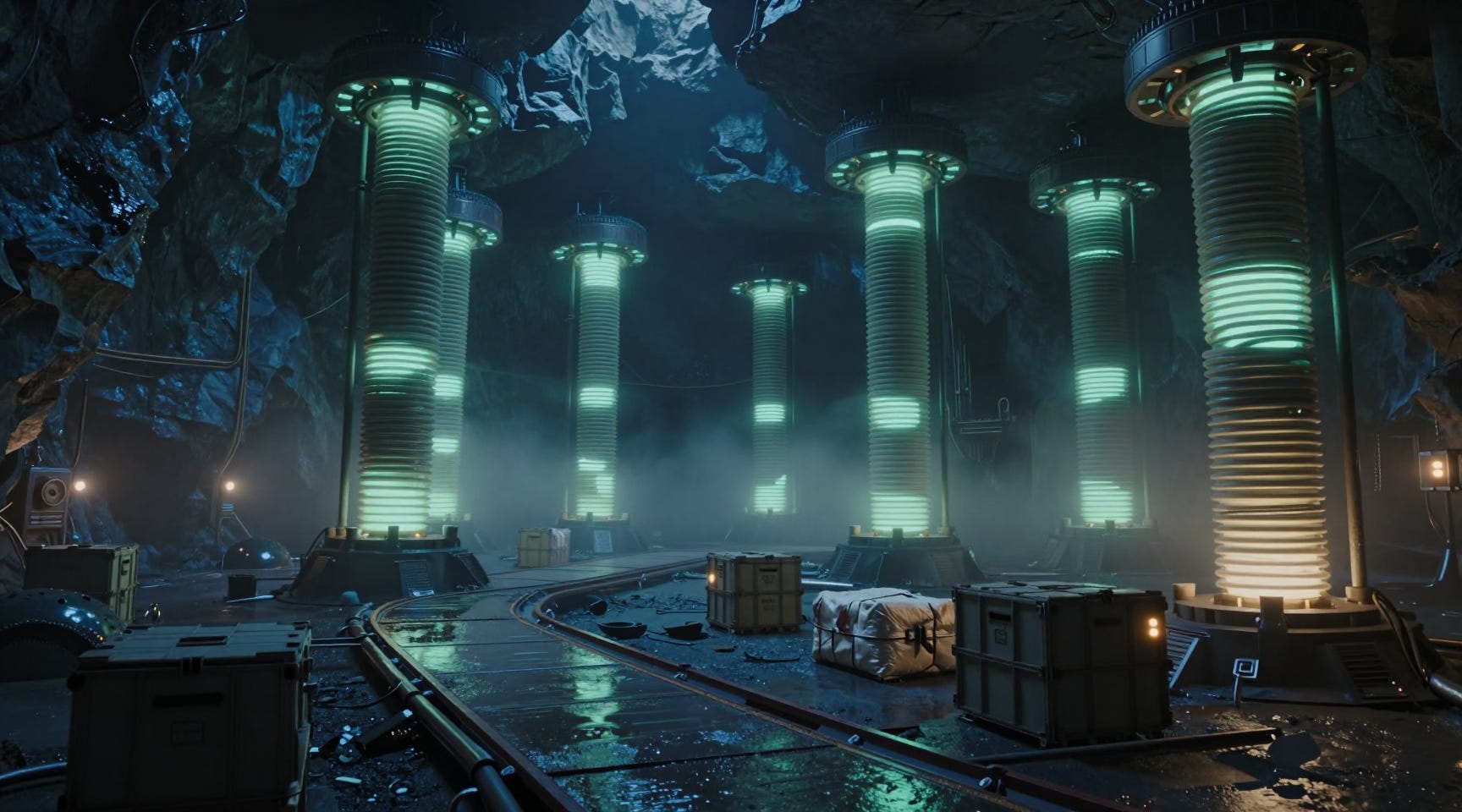
Angelica keyed in Redwood’s biosample certificate anyway, letting the system flag it for denial while she traced the numbers. A single cascade reactor cycle could fill both demands if she spiked the lattice trap beyond specification. Overstress the coil and Tank Six would fracture, drowning the plant in flash-frozen mist. Hold to the ratio and Redwood’s children would drink chemical slush until their stomachs bled.
Static hissed through the ceiling speaker. “Persephone Control, confirm dispatch ninety-eight: seventy-thirty split, execute within twelve minutes.” The dispatcher never gave names, only percentages. Compliance kept promotions on track. Compliance also buried entire settlements when the spreadsheets fell short.
A separate icon pulsed at the edge of her slate, a soft amber reserved for debtors who never stopped asking. “Arc Redwood Logistics: offering hull plate credit, volunteer labor, med-grade algae concentrates.” The note ended with a single data point: ninety-one infants on anti-parasitic treatment. No names there either, yet each numeral dug behind Angelica’s sternum.
She silenced both channels. The reservoir’s air smelled like ozone and thawed comet dust. Tank Six’s pressure climbed as the Vethrak coil ramped toward overload, translucent filaments twisting inside the condensation chamber. Angelica slid her right hand into the manual control glove, skin prickling from residual charge, and overrode the cascade reactor’s safety curve.
The coil’s hum rose until the decking vibrated through her boots. Warning glyphs flashed across the slate: STRUCTURAL DRIFT, PHASE ERROR, DO NOT EXCEED. Angelica widened the field aperture by half a degree, forcing vapor into the auxiliary condenser they salvaged from a harvester scout two winters ago. The condenser’s shell bore melted scars from the day a pirate crew tried to torch it. It never forgave heavy hands.
Moisture surged into the auxiliary stack, turning the tower into a column of glittering ice. Angelica rerouted feedstock toward Redwood’s waiting freighter, CSV Laurel Bay, already docked beneath the reservoir cradle. The ship’s Aurora Drive purred through the decking, hungry for mass. She allocated eighty-three metric tons to Redwood, the remainder to Vesta, and marked the delta as FOLD LOSS COMPENSATION.
Alarms doubled. Tank Six dipped two degrees toward fracture. Angelica bled heat through the emergency sink, counting heartbeats until the glyphs cooled from crimson to amber. The coil steadied, its green aurora dimming to a manageable pulse. Condensation rained over her shoulders. Her braids clung to the collar of her coverall yet she refused to wipe the water away. Motion wasted seconds.
“Control, your timer expires in sixty seconds.” The dispatcher sounded bored. The voice never changed, even when they condemned habitats. Angelica forced breath through clenched teeth. “Dispatch ninety-eight fulfilled,” she answered. “Recording additional fold attrition per attached log.” She transmitted the forged sensor variance, citing phantom turbulence along Corridor Mesa-Nine. Auditors would spend weeks chasing a ghost while Redwood’s pipes refilled tonight.
CSV Laurel Bay eased free from the cradle. Fold capacitors along its spine shimmered blue before vanishing into the corridor. Angelica pictured water vapor condensing against the freighter’s hull plating and refused to consider what might happen if auditors cross-checked her numbers tomorrow. Redwood’s reply pinged seconds later: a single image of children clutching tin cups beneath arc lights, cheeks round again. Someone in the settlement had risked bandwidth to send proof.
Angelica saved the image inside a hidden folder labeled MAINT LOGS, then deleted the transmission from official records. Regulations required total transparency; survivors required selective obedience. She updated Tank Six’s maintenance ticket to note microfracture propagation at flange beta. The lie guaranteed a shutdown window tomorrow, buying time to reinforce the shell before the next ratio war.
Night-cycle strobes dimmed overhead, plunging the reservoir into pale blue gloom. Angelica placed her forehead against the guardrail and counted three steady breaths. The plant still hummed. The Salvage Protocol still demanded numbers that never matched reality. Redwood’s ribbon of farmland would stay green for another week because she pushed a Vethrak coil one degree past sane. Tomorrow, Vesta might beat down her door for falsifying logs. Tonight, the ledger balanced enough for her to walk out of the reservoir with her conscience intact.
Author’s Note: Ceres hosts multiple reservoir plants that keep the asteroid belt alive. Angelica’s job mirrors real allocation fights happening in Year 11, when the Salvage Protocol prioritized military staging over vulnerable settlements like Redwood.
If you enjoyed this story, you can follow the main story arc in The Exodus Rush, the first book in The Vethrak Requiem series.