


Hermela enforced quiet in the intake bay by habit. Noise made people careless. Carelessness became mistakes, and mistakes became funerals.
Luna Station Alpha never slept. It dimmed. It rationed. It rotated watch schedules until time blurred into shifts and alarms. The bay lights sat at fifty percent, leaving the corners in dusk. Cold metal carried every footstep.
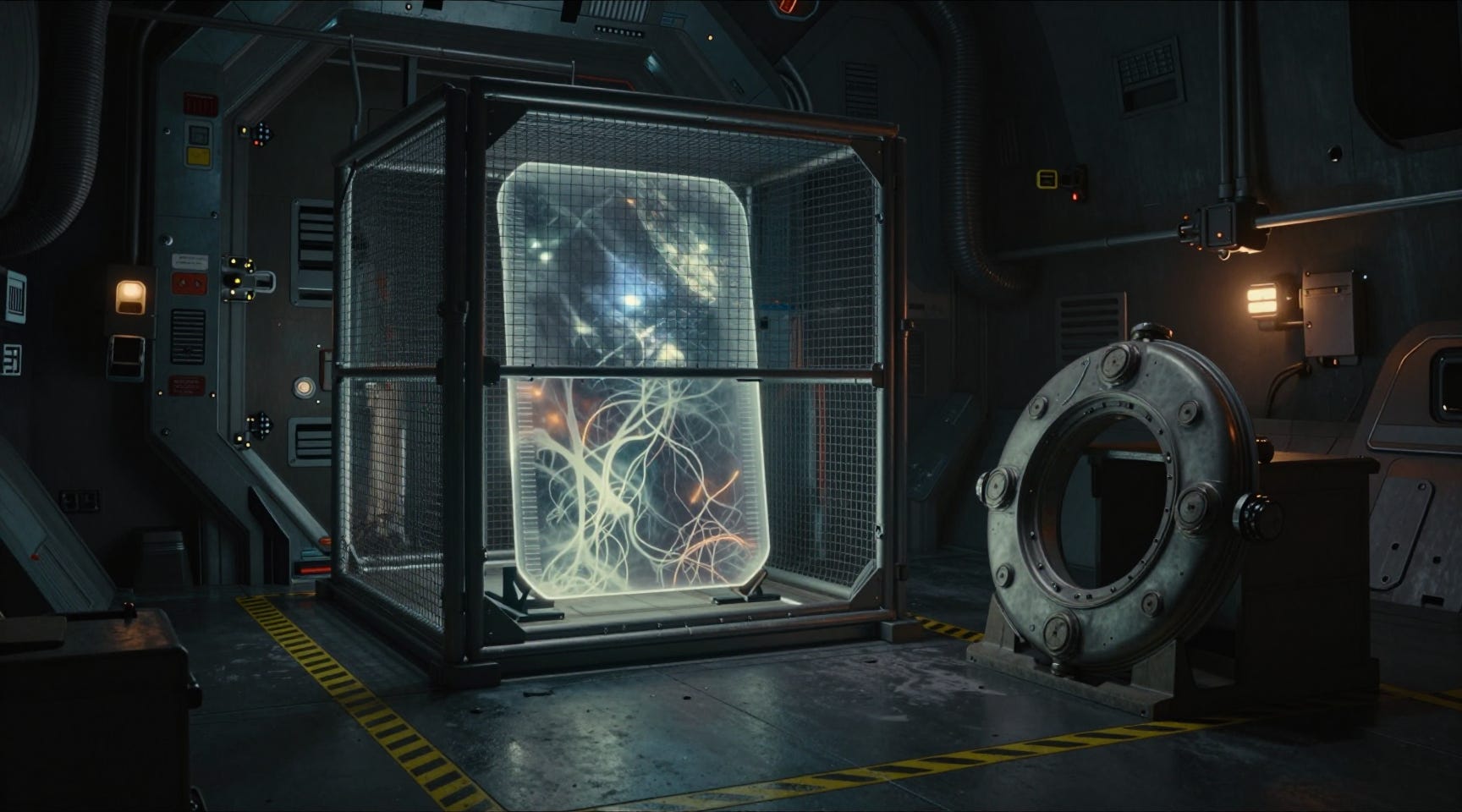
A cargo cradle rolled in on mag rails, guided by dockhands with tired eyes and scarred gloves. The crate on top wore three layers of warning tape and a hand-painted glyph in black: salvage.
Hermela stepped to the yellow line, tablet awake in her palm. The manifest pinged her with a familiar lie.
CSV Sparrow, inbound from Lagrange Five. Contents: structural scrap, mixed.
Mixed meant anything nobody wanted to explain.
One dockhand jerked his chin toward the crate. “Captain says it came off a Vethrak hull.”
The words tightened the bay. Even the air recyclers seemed to hesitate.
Hermela kept her face flat. Panic never helped.
“Inspection cage,” she said.
The dockhands nudged the cradle into the marked zone. A mesh canopy dropped from the ceiling with a hiss, locking the salvage inside a metallic web. Luna Station Alpha did not take chances with unknown materials.
Hermela ran the intake scans in order.
Radiation: nominal.
Biological: none detected.
Exotic field residue: trace.
Trace meant proximity to Fold events or to alien systems that mimicked them. Division Two begged for trace materials. Security hated them.
Her earpiece crackled. “Intake, this is Security. Confirm salvage is isolated.”
“Isolated,” she said.
“Hold until we arrive.”
Footsteps could not reach her yet, but she heard them anyway in her head. Security treated every unknown object like a bomb with opinions.
Hermela opened a comm line to Division Two. “Trace residue on a salvage crate. Possible hull alloy.”
A pause. Then a voice, sharp with caffeine and hunger. “Bring it down.”
“Not my call,” Hermela said.
“Make it your call,” the tech snapped. “You want civilian Fold routes that do not kill crews? We need samples.”
Everyone wanted those routes. Everyone wanted miracles that did not ask for blood.
A bell tone chimed at the bay entrance.
Two civilians pushed a smaller cradle inside. Their coveralls were not station issue. Their faces held the look of people who had stopped believing rules would save them.
The woman at the front lifted a hand. “Intake?”
“Restricted bay,” Hermela said.
“Emergency parts claim.” The woman spoke without pleading. “Ops sent us.”
Hermela’s tablet pinged with the request.
CSV Nightingale. Medical courier.
Requested: pressure seal, habitat grade, size twelve.
Hermela looked at the man behind the cradle. His hands shook on the handles. Exhaustion and adrenaline fought for control.
“Parts lockers are empty,” he said. “Our seal cracked on approach. We patch it for an hour, maybe two. Then the cabin leaks.”
The woman swallowed. “We carry antibiotics and dialysis filters. Cygnus Station has an outbreak. People are dying.”
Cygnus. A rotating can of metal and desperation, crowded beyond its design, held together by hope and duct tape.
Hermela lifted the claim details.
Departure window: three hours.
Three hours was nothing on a station where a requisition could take three days.
Hermela turned back to the salvage cage. The crate sat inside, taped shut, glyph staring back at her.
Hull plating did not make pressure seals.
Vethrak hulls did not behave like human hulls.
Division Two reports had shown fragments that flexed and sealed under stress. Materials that seemed to heal.
A clean path existed. Deny the claim. Route them back through ops. Let Security take the salvage. Let Division Two scream at her later. No risk, no blame.
The other path required a lie.
“Show me the seal,” Hermela said.
Relief flickered across the woman’s face like a match catching. The man pulled a panel off their cradle.
A ring of clear polymer lay inside, fractured along one edge. The crack looked like a tiny lightning bolt.
Hermela lifted it with both hands. The fracture was clean, fatal. A patch might hold for minutes. It would not hold through a Fold transition.
Her earpiece crackled again. “Intake, update.”
“Processing a medical claim,” Hermela said.
“Medical claims are not your priority.”
“They are today.” The words came out before caution could stop them.
Silence. Then, “Five minutes.”
Hermela ended the call.
She set the cracked seal on a crate, then opened the salvage manifest.
Mixed structural scrap.
Amendments triggered audit flags. Flags triggered reviews. Reviews triggered questions, and questions always found Security.
Hermela exhaled, slow.
She changed the line item.
Mixed structural scrap became polymer composite salvage, habitat grade.
A lie shaped like a bureaucratic synonym.
The station software accepted it without complaint.
Hermela keyed the cage controls and used the remote manipulator arm to peel back the crate lid.
Inside lay a curved plate, translucent gray, with veins of darker material running through it like frozen smoke. The surface caught the bay lights and returned them in muted halos.
Alien metal, quiet and sure of itself.
Hermela angled the manipulator, slid the cracked seal into the cage, and pressed the plate’s edge against the fracture.
No sparks. No alarms. No magic.
The plate flexed.
The fracture closed.
Hermela held her breath.
The polymer did not melt or deform. The crack simply vanished, as if it had never existed.
Her pulse hammered against her ribs.
She pulled the seal back and rotated it under the light. Smooth. Whole.
The man whispered, “What did you do?”
“Nothing,” Hermela said. Her voice stayed steady through effort, not confidence.
The station rules crowded her mind.
Do not distribute untested salvage.
Do not alter manifests.
Do not interfere with Security.
Rules did not keep Cygnus Station alive. People did.
Hermela set the repaired seal back on the cradle. “Take it.”
The woman stared at her. “You will get in trouble.”
“Leave before Security arrives,” Hermela said.
The man grabbed the cradle handles. Anger had burned down into something raw and grateful.
“We owe you,” he said.
“Pay it forward.” Hermela kept her eyes on the seal.
The civilians pushed the cradle toward the exit, wheels squealing under their hurry.
Hermela faced the salvage cage again.
The Vethrak plate sat inside, innocent and deadly.
Security would arrive in minutes. Division Two would demand the sample. Administration would ask why intake processed a medical claim without routing.
Hermela opened her tablet and filed two reports.
One to Security.
Salvage intake complete. Trace exotic residue. Item contained. Request transport to quarantine.
One to Division Two.
Sample received. Hull alloy exhibits stress-seal interaction with polymer composites. Recommend controlled testing. Avoid exposure to human tissue.
Hermela paused, then added a final line.
Medical courier departed dock twelve with repaired habitat seal. Do not interfere.
The sentence sat on the screen like a dare.
Footsteps echoed beyond the bay lights.
Hermela clipped the tablet back to her belt and stood beside the cage.
Fear settled into her bones, heavy and familiar.
Hope settled beside it.
The station could take one of them from her. It could not take both.
Author’s Note: This story takes place in Year 4, when Luna Station Alpha functioned as humanity’s battered hinge between survival and extinction. One repaired seal can feel small. In the collapse years, small kept people alive.