


The wheat stood golden in the morning light, two hundred acres of it swaying in the wind that swept across what used to be called Nebraska. Sarah Chen walked between the rows, running her hand along the stalks, feeling the weight of the grain heads bend beneath her fingers.
Ten years ago, this field had been a crater.
She knelt and pulled up a handful of soil, dark and rich, nothing like the scorched earth they’d started with. It smelled like life, like possibility, like home. Her mother had taught her to read soil this way, back before the invasion, back when the family farm was still intact and harvests were routine rather than miraculous.
Her mother hadn’t lived to see this day.
Sarah let the soil fall through her fingers and stood. Behind her, the settlement stretched across the valley: three hundred prefab buildings arranged in expanding circles around the original emergency shelters. They’d arrived five years ago, two hundred refugees from the Denver crater zone looking for somewhere to rebuild. The soil surveys had shown potential. The water table was intact. The radiation levels were acceptable.
Acceptable. That was the word they used now. Not safe, not clean, just acceptable.
She heard footsteps behind her and turned to see Marcus Webb approaching, his face creased with the same exhaustion everyone carried. He’d been a banker before the invasion. Now he coordinated crop rotations and irrigation schedules, skills he’d learned from manuals and mistakes.
“Morning, Sarah.”
“Morning, Marcus. You’re up early.”
“Couldn’t sleep. Kept thinking about the harvest.” He gestured at the wheat field. “Ten years we’ve been clawing our way back. This is the first time we’ve grown more than we need to survive.”
Sarah nodded. The first three harvests had been partial failures, enough to keep them fed but nothing extra. The fourth had been better. The fifth had been good. This year, the sixth harvest, they would have surplus. Enough to trade with other settlements. Enough to start thinking beyond simple survival.
“How much?” she asked.
“Sixty tons if the weather holds. Maybe seventy.”
Sarah did the math in her head. The settlement needed twenty tons to make it through winter. That left forty tons for trade, for building reserves, for the luxury of planning ahead.
“We made it,” she said quietly.
“We made it,” Marcus agreed.
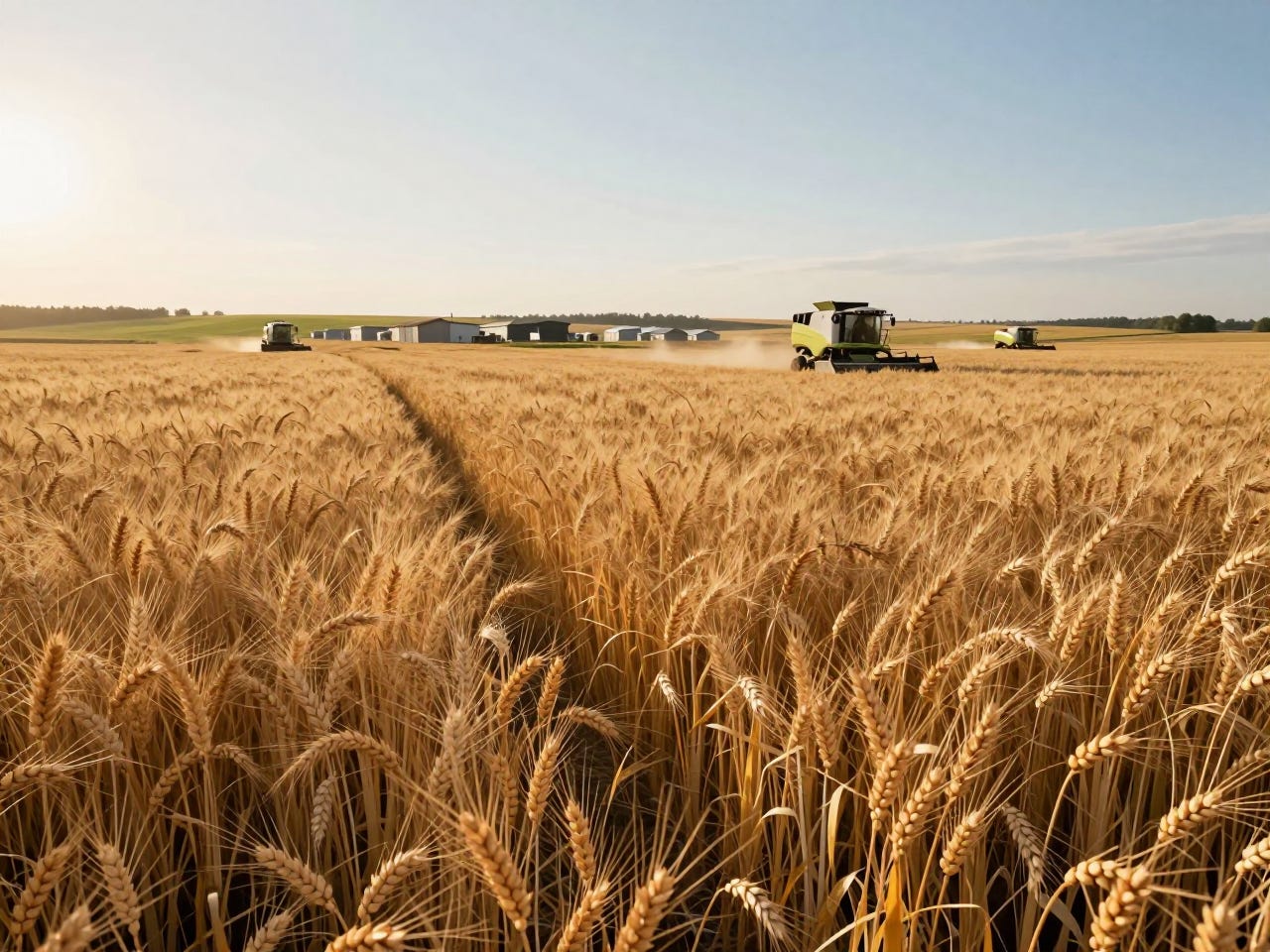
The harvest began three days later.
Fifteen people worked the combines, machines cobbled together from pre-invasion equipment and salvaged parts that had never been designed to work together. The noise was tremendous, grinding and roaring as the blades cut through the stalks and the threshers separated grain from chaff.
Sarah drove the lead combine, guiding it down the rows she’d planted by hand five months ago. Through the cab window, she could see the grain pouring into the collection hopper, golden and perfect. Each pass filled another ton of storage. Each ton represented security, stability, the chance to think about something other than immediate survival.
The children watched from the settlement perimeter, kept safely back from the machinery but close enough to see. Most of them had been born after the invasion. They’d grown up in a world of rationing and resource management, where every gram of food was accounted for and hunger was always one bad harvest away.
They’d never known abundance. After today, they would.
Harvest took four days. The weather held, clear skies and gentle winds that made the work almost pleasant. Sarah fell into the rhythm of it: guide the combine, watch the grain flow, turn at the end of the row, repeat. Her back ached. Her hands cramped from gripping the controls. She’d never been happier.
On the evening of the fourth day, they finished. Sixty-two tons of wheat sat in the storage silos, more food than the settlement had seen since its founding. The combines stood silent in the field, exhausted like the people who’d driven them.
Marcus called an assembly in the central square. Three hundred people gathered, the entire population of the settlement, standing in the space between the original emergency shelters and the newer permanent buildings they’d constructed over the years.
“We did it,” Marcus said. His voice carried across the square, amplified by speakers that still worked despite a decade of hard use. “Sixty-two tons. Enough to feed us through winter with forty tons to spare.”
Silence. Then someone started clapping. Others joined. Within seconds, the entire settlement was applauding, the sound echoing off the buildings and out across the empty plains.
Sarah stood at the back of the crowd, watching. She saw Emma Rodriguez, who’d lost her husband and both children on Day 2. She saw David Kim, who’d been twelve when the invasion started and was now a young man working the machine shop. She saw faces that carried scars, visible and invisible, reminders of what they’d survived.
They were clapping for wheat. They were clapping for survival. They were clapping because for the first time in ten years, they had more than they needed.
That night, the settlement held a feast.
They couldn’t afford to be wasteful, not with winter coming and reserves still being built. The meal was simple: fresh bread from the new grain, protein concentrate, vegetables from the greenhouse. But there was enough. Everyone ate until they were full, a sensation many of the children had rarely experienced.
Sarah sat at one of the long tables they’d set up in the square, surrounded by people she’d worked beside for five years. Conversation flowed around her: plans for next year’s planting, debates about which crops to diversify into, proposals for expanding the settlement boundaries.
They were planning. They were thinking beyond survival, beyond making it through the next season. They were thinking about growth, about building something that would last.
Emma Rodriguez sat down beside her, carrying two cups of water. She handed one to Sarah.
“Your mother would be proud,” Emma said.
Sarah’s throat tightened. “She never got to see this. The field growing, the harvest.”
“She saw you surviving. That was enough.” Emma gestured at the square, the people eating and talking and laughing. “This is what she fought for. What we all fought for. The chance to get here.”
Sarah looked at her water cup, the liquid inside clean and clear, drawn from aquifers that had survived the bombardment. Simple. Ordinary. Precious.
“To the harvest,” she said, raising her cup.
“To the harvest,” Emma replied.
They drank together in the gathering darkness, surrounded by three hundred souls who’d clawed their way back from collapse. Above them, stars emerged one by one, the same stars that had watched eleven billion die and two billion survive. Indifferent. Eternal. Beautiful.
In the storage silos, sixty-two tons of wheat waited to become bread, to become life, to become the foundation of whatever came next.
The first harvest was complete. Tomorrow, they would start planning the second.
Author’s Note: This story takes place in Year 10 of the Post-Invasion calendar, a decade after the Vethrak killed eleven billion people and destroyed most of human civilization. By Year 10, the survivors had moved beyond immediate crisis response into the difficult work of rebuilding: establishing permanent settlements, restoring agriculture, creating sustainable communities. The first successful surplus harvest in a settlement represented a crucial milestone, the moment when survival became growth.
If you enjoyed this story, you can follow the main story arc in The Exodus Rush, the first book in The Vethrak Requiem series.