


Tuva erased herself from the preview without touching her signature.
One control changed the original work package into its proposed outbound copy. Her full name vanished. In its place stood a role token, a shift, and the assurance that the work had been performed by someone qualified.
She changed the view back.
Tuva Hawthorne. Weld execution complete. Structural release pending witnessed proof and materials disposition.
The qualification had survived. The hold had survived too. Only the person had disappeared.
Beyond the station, Article Four hung captured in Slip Two. Microcracks beside three transition welds still kept the barrel from leaving. Replacement plate waited in a separate cradle; selecting it had authorized no repair.
Tuva secured the slate and called Onur.
“I need the retention rule behind this.”
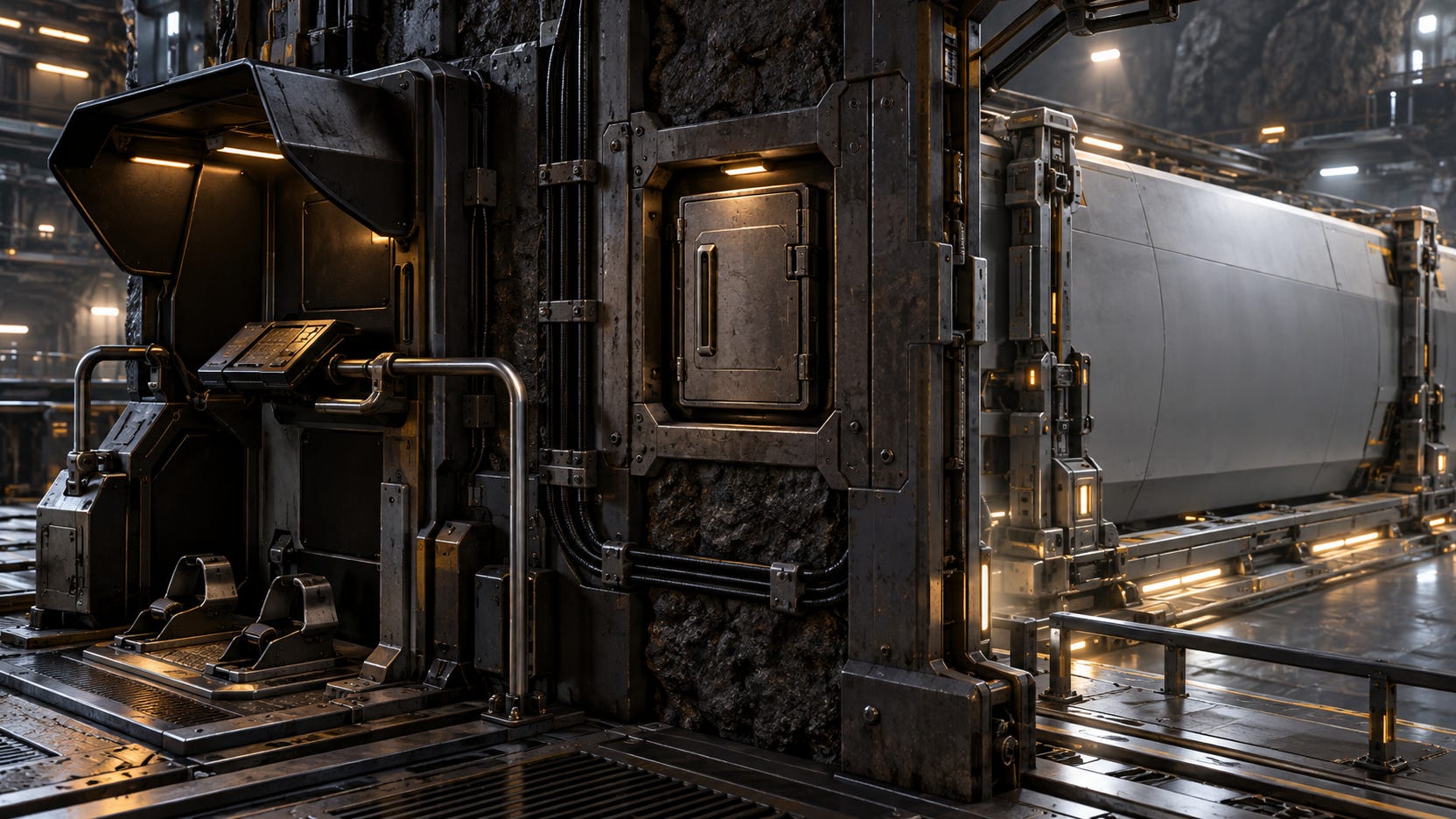
He arrived with a restricted review open, his tether clipped short beside hers.
“The outbound copy doesn’t carry legal identities,” he said.
“I know. Open what stays here.”
The operational token still linked to her named execution record inside the yard. The investigation had used that link to compare her torch settings, stops, consumables and qualifications with the control she had made afterward.
Onur opened the retention field.
The link was temporary.
Outbound acceptance would close the work package’s ordinary custody period. Under the old schedule, the name-to-work-package association would then be removed. The technical record would keep a qualified role and the act it had signed.
Tuva hooked her fingers beneath the station rail.
“The plate keeps every version now.”
“The technical versions.”
“This is one.”
He left the rule open rather than explaining it away.
She expanded the qualification reference. It could establish that an authorized torch hand had performed the work without preserving which torch hand. That had been enough for a record designed to say the job was finished.
It had not been enough when the job proved wrong.
“You used my original record,” she said. “The same person, the same setup, the control. You could ask me which pause belonged to the power limit.”
“Your execution trace remains.”
“The trace doesn’t answer a question.”
Onur checked the pane she indicated. Their finding distinguished the instruction from her workmanship. It had needed the retained link to put those things beside each other, rather than treating every qualified pair of hands as interchangeable.
“The acceptance hasn’t happened,” he said.
“That’s why I’m asking now.”
The sealed identity desk occupied a recess beyond the work-package station. Its side panels blocked the display from the access corridor. Tuva caught the entry rail, secured her boots, and waited while Onur admitted the exact review purpose.
He did not open the personnel roster.
“Your own record first. No shift view.”
The screen held her legal name beside a qualification reference. No home address. No emergency contact. Those belonged to other restricted purposes, not the weld package.
Tuva placed the work reference beside it.
“Keep this relationship. My role on that job, the qualification that applied then, my signature, the date. The next person’s work as theirs. Inspection as inspection. Release as release.”
“A builder roll.”
The phrase sounded larger than the space she needed.
“Not something on a wall.”
“A record like that could map most of a shift.”
Onur closed even her limited view before turning toward her.
“People, qualifications, places in the work. Someone gets that together, they don’t need your address to know what to threaten. They can choose the person whose absence stops a whole package.”
Tuva kept one hand on the restraint. His objection had a shape she could recognize: a line pulled tight enough to drag everyone attached to it.
“Then don’t put it together for everyone.”
“Making it sealed doesn’t make it harmless.”
“Neither does deleting it.”
Her voice carried into the recess. She lowered it.
“I don’t need to read anyone else’s name. I need the yard to be able to answer whose work it was.”
The screen darkened through its privacy timeout. Onur left it dark.
“Who gets to ask?”
That was a better question than whether her name mattered.
Tuva took the slate from its clip and made a local proposal. She listed only what the work required: legal name, role, qualification at the time, work-package link, scoped signature, date.
She removed a free comment field before Onur asked. No biography disguised as useful context. No convenient place for a supervisor to attach an opinion about someone.
“Engineering keeps the work reference,” she said. “Identity custody keeps the person. An approved question joins them.”
“Not the ordinary material query.”
“A separate purpose.”
He secured his slate beside hers. The two-key materials record already separated technical need from source identity. It was not permission to open workers’ identities simply because someone could open a plate history.
Onur placed that distinction in the proposal.
Tuva read it twice. Engineering need and compartmentation authority would have to agree on the same bounded personnel question. Neither a foreman’s curiosity nor an old approval would make a shift list appear.
“Keep the request and the opening,” she said. “Who asked. What they were allowed to see.”
“A release signature isn’t a statement that the welder released the barrel.”
“Then keep its scope. Mine says execution. Wanjiku’s will say what hers actually permits.”
He entered that beneath the retained qualification. They would preserve the record that applied when the person acted, not replace it with whatever permission that person held later.
The proposal acquired another revision. The earlier version remained beside it.
Tuva’s throat tightened. Her first line had asked to keep names. This one asked to keep the difference between acts.
Onur read the retention exception they would need.
“This doesn’t change the schedule yet. Oversight has to see what we’re retaining and how the join is controlled.”
“Put the deletion in the question too.”
He attached the existing rule without softening its consequence. Outbound acceptance would still trigger it unless the exception was authorized. No promise of preservation had become a fact merely because they had designed a better record.
“I can take this forward,” he said. “Not as ordinary access. Not as a roster export.”
“It doesn’t leave the yard.”
“No names on Article Four.”
“None.”
Tuva signed the proposal as its author. Onur recorded compartmentation review pending. Neither signature released the barrel or approved the roll into use.
Back in Slip Two, the work-package station still displayed the original conditional completion. Tuva opened its outbound preview once more.
The role token remained where her name had been.
She let it stay. Whoever received the structure did not need a trail back through her to the yard. They needed a sound barrel and an engineering record that could survive a question later.
Inside Site Anvil, somebody would need to know who could answer.
She saved the proposal’s reference beside the unresolved personnel question, separate from the materials finding. Onur had retained the original rule with it. Their next review would have to confront both, not a summary that claimed the problem was already solved.
Tuva clipped the slate, transferred to the access rail and checked the barrel’s zero-load access condition. Her tether paid out only as far as the permitted position.
The plate beneath her glove was blank. No name would be cut into it. Behind the partition, her proposed record waited where the departing steel would never carry it.
Author’s note: This story follows Tuva Hawthorne in late Year 3, before Article Four’s rework is authorized. The builder roll is a proposal for protected accountability, not a public memorial or an approved personnel export.
New to The Vethrak Requiem? Start with The Exodus Rush, Book 1, where humanity fights for survival after an alien invasion using technology it barely understands. These short stories explore the wider universe; the novel begins the main story.