


The last tag would take one pull. Onur Tekin left it on the hull.
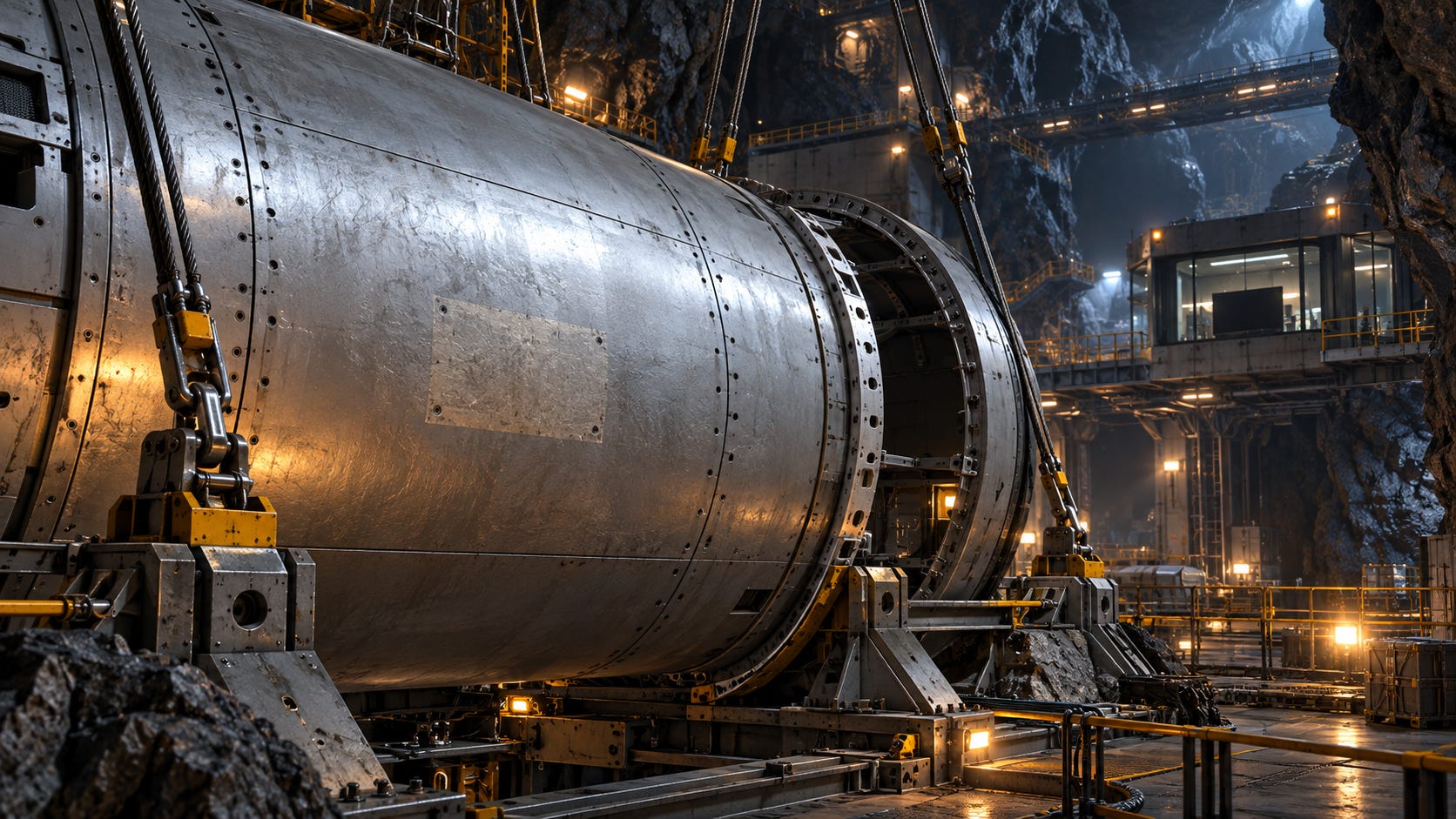
Below his tether, a handler held a collection sleeve open against Article Four’s gray curve. The other tags were inside it already, their fasteners captive, their local numbers turned inward. A pale rectangle showed where an inspection overlay had been lifted. Nothing on the bare steel said how long the yard had waited to trust it.
“That one too?” the handler asked.
“When the record check closes.”
Onur clipped his return line to the access rail. The handler secured the sleeve and moved to the next scaffold mark without touching the remaining tag.
Inside the outbound booth, Wanjiku Bett had fastened her tablet beside the export terminal. One line of the engineering package was empty.
“This was present in the release copy,” she said.
The missing field governed later heating of the repaired transitions. Onur opened the scrub record. Its source reference pointed into a local work package containing the yard’s power allocations. The export rule had excluded the reference and everything attached to it.
Geometry remained. Passed proof remained. The limitation had gone.
Onur put his thumb against the terminal’s restraint bar until the pressure hurt.
Weeks earlier, he could have explained why the empty field was correct. The power schedule belonged inside Site Anvil. A receiving crew had no reason to learn which other bay went cold while this steel cooled. Every shift and load block carried another chance to place the yard.
They did need to know what heat they could apply.
“Keep the outbound copy held,” he said.
Wanjiku did not move her tablet. “It is.”
He retained the rejected export beside the rule that had produced it. Deleting either would leave a cleaner record than the work deserved.
The repair history opened under his technical review scope. Measured cooling curves remained linked to the original allocation and Cho’s later adjustment. Farther back sat the failed proof, the cutback boundaries and the qualified corrective procedure. Those records would stay. Their absence from an outbound file did not make them disposable.
Wanjiku extracted the governing thermal restriction into a self-contained engineering field, retaining its approved revision and signed limits. The source-to-export relation stayed local. Onur inspected the actual outbound bytes, including attachments, rather than trusting the preview.
No bay designation. No shift roster. No power schedule. The restriction and its governing technical revision survived.
“Could they apply the old common treatment?” he asked.
“Not under this release.”
“Could they mistake the proof for permission?”
She turned the tablet toward him. The qualified axial and bending envelope sat beside its limits. Inspection coverage and resolution were stated separately. A passed test offered no authority to change the joining treatment or use an unqualified interface.
“Read it as the person with the heater,” she said.
Onur did. That person would have enough information to stop.
He signed compartmentation acceptance of the revised export. Wanjiku signed its technical content. Neither signature filled the other’s field.
Outside, the crew had stripped the last chalk overlays from their removable carriers and cleared the scaffold reference marks. Article Four stayed mechanically captured. Its released seams were untouched. Onur followed the inspection route by handholds, checking the places where temporary identifiers could hide beneath brackets or inside a cover lip.
The recessed data tag was different. It belonged to the barrel now.
A technician seated it in its protected pocket and read it back through the receiver-facing reader. The display returned a long random token. Onur compared it with the engineering package, then with the local binding record. All three matched.
The token contained no yard serial or disguised initials. There was no maker, route, person or intended vessel to extract from its characters. It would remain after the transfer crew’s authority ended.
A persistent number could still lead nowhere.
Onur carried the reader’s result back into the booth and opened the isolated acceptance-test station. Its view had the outbound package and the broker interface, but no access to the yard’s internal map. He submitted a bounded inspection-history question bearing the token. The test request asked for the retained post-proof examination’s coverage and revision, nothing about its authors or location.
The broker acknowledged custody. The record remained unopened.
He left the station alone.
The next communications window passed while he and Wanjiku compared the package’s material attributes and qualified interfaces against the released geometry. A handler brought in the sleeve of recovered tags. Onur counted them against the removal record, sealed the sleeve and logged its local custody. The one still attached outside had an open line.
Later, a batched inbound request appeared on the protected side.
Its question matched. Its lifecycle token resolved to Article Four’s retained record. The broker had supplied no requester address, and the test station had received no yard address in its custody receipt.
Wanjiku authorized the engineering need. Onur bound his compartmentation approval to the same token, question and technical scope. The protected join opened only after both were accepted. The personnel branch remained sealed under its separate purpose.
They released the requested examination coverage and governing revision through the broker. Onur closed the grant and retained the access receipt.
There was another wait before the answer reached the isolated station. He used it to check the barrel’s exterior for the final time. Apart from the final removable tag, no manufacturer stamp, yard mark, ship name or persistent site serial remained. The tag waited under the handler’s gloved finger.
Back at the station, the signed answer finally arrived. Wanjiku compared its revision with the retained examination. Onur checked the returned payload and wrapper. The answer survived the trip. Neither endpoint’s identity had come with it.
He closed the test record.
Only then did he generate the separate custody code for the local transfer crew. Its authority covered the assigned handoff. Remote acceptance would expire it; the lifecycle token had no such expiry. Nothing moved through the lock today.
The handler called from the cradle. “Last tag?”
Onur opened the local record’s retention view. Failed exports and passed inspections remained in sequence. The sealed source partition and protected builder roll showed their retained status without opening either to him. The complete history was still there, including the decisions he would rather have made differently.
He locked the terminal. Its privacy screen went black.
“Remove it.”
Through the booth window, the handler drew the tag into the sleeve and secured the closure. Blank steel filled the little rectangle it had covered. Onur rested one hand on the locked terminal while the removal acknowledgment entered the local record.
Author’s note: This story takes place at Site Anvil in late Year 3 (2128), after Article Four’s structural release and the sealing of its protected builder roll. Its departure still lies ahead.
New to The Vethrak Requiem? Start with The Exodus Rush, Book 1, where humanity fights for survival after an alien invasion using technology it barely understands. These short stories explore the wider universe; the novel begins the main story.