


Tuva Hawthorne caught the loose end of her tether before it could brush the prepared edge.
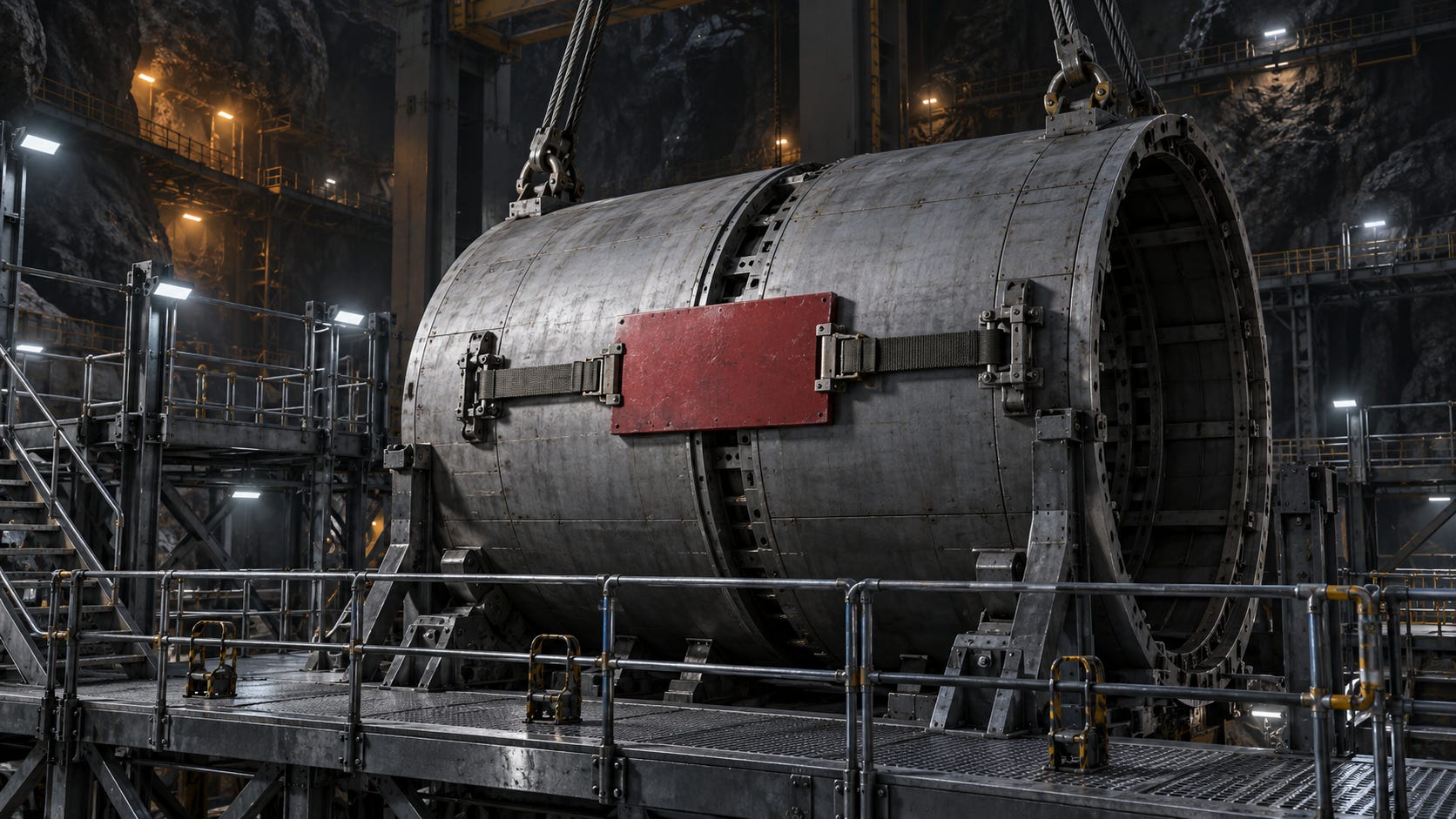
She clipped it shorter, pulled against the scaffold rail, and tested the latch with her whole weightless body. The rail answered through her shoulder. Below her boots, Article Four hung in crane slings, a short barrel of gray plate waiting to connect two pressure hulls somewhere she would never be told.
Its outside carried nothing. No maker’s stamp. No registry. Even the places where a fitter might have scratched an alignment arrow remained clean.
Inside, removable tags crowded the assembly clamps. Every piece had a local serial. Tuva turned the nearest tag against its retaining cord until its number faced her lamp, then matched it to the work package on her cuff.
The two pieces beneath her came from the same lot. The next seam did too. Across the far transition, the lot changed.
She opened the authorization instead of trusting the green queue icon.
Same-lot seams approved for this shift. Mixed transition: preparation only. No joining pending materials review.
Yesterday, Samrawit Assefa had separated two plate groups that looked identical. The paired coupons were still in the test queue. Tuva had the dimensions, the procedure, and a limit she could point to. She did not have a result.
“Torch hand, Slip Two,” the schedule controller said. “Package acknowledged?”
“Same-lot work acknowledged. Mixed joint stays open.”
“Prepare that joint for the next window. We need the fixture back.”
She hooked both boots into the restraint bar and drew the gauge from its secured pouch.
The first bevel accepted the gauge without rocking. She checked the root opening at each marked position, then passed a gloved fingertip along the adjacent clamp jaws. No gap beneath the seat. No loose jaw waiting to shift when heat pulled the pieces together.
The protective covers peeled back into their own retainers. She checked for adhesive on the weld faces, caught a sliver on the cover edge, and sealed it in the waste pouch. A fleck too small to enter the shift report could still enter a seam.
Her lamp found a pale scuff at the second restraint. She pulled against it, checked the locking pin, and ran the gauge again. The fit held.
Tuva attached the torch to the calibration fixture. The test arc brightened behind her lowered visor. Current and feed matched the procedure; the shielding line held its pressure. She killed the arc, checked the recorded values, and moved the fixture out of the work envelope.
The high-output window showed sixteen minutes.
She had rehearsed the route with the torch cold. Two short seams, a controlled reposition, then the mixed-joint preparation. No searching for a tool while power burned away.
Her cuff chimed.
Eleven minutes.
Bay Three had taken its test allocation.
“That is five gone,” she said.
“Confirmed. Lower setting available afterward.”
The lower setting would not cover this procedure. She could change her order. She could not turn an inadequate arc into an adequate one by wanting the fixture clear.
“I will finish the approved seams at the qualified setting. Preparation follows with the torch parked.”
“Log the carryover if you miss.”
She locked the cuff display where the countdown would remain visible through her visor.
The arc struck. White filled the joint; beneath it, the pool formed a narrow moving edge. Tuva advanced against the drag of the torch line, keeping her wrist clear of the clamp. Her boots supplied the reaction her body could not supply alone.
Heat pressed through the glove. The scaffold carried a low vibration from another bay, steadier than the pulse at her hand. She kept the two separate. Her own weld had a pace she could control.
At the end of the first seam she filled the termination, killed the arc, and secured the torch. The countdown kept running while she checked the completed pass and measured temperature at the procedure’s specified point.
She released one boot, clipped to the next scaffold loop, tested it, then released the other. The barrel curved away into shadow. Her tested tether kept the next rail within reach.
The second restraint bar met her soles. She locked in, checked the fit again, and lifted the torch.
Her forearm cramped before the final length. She eased her grip without changing the angle. Years of practice had taught her to stop squeezing a tool that was already where it belonged.
The second seam ended with forty-three seconds left.
She parked the torch before the output changed. Both completed seams entered the fabrication record under their piece serials and her shift designation. Completion of her work did not sign the barrel out of inspection.
The mixed transition was easy to make look finished.
Its edges aligned. The clamps held the opening within tolerance. Tuva could remove the last cover, dress the bevel, and leave a clean joint beneath a green preparation entry. Someone arriving half awake would find the torch connection ready and the hard part apparently done.
She left the covers secured over the prepared faces and retrieved a red hold plate from the scaffold locker.
“Slip Two,” the controller said. “I have preparation complete on the board.”
“Preparation checked. Installing the hold.”
“The electronic hold is already on the package.”
Tuva threaded the plate’s captive straps through two existing assembly-clamp eyes. No hole in the hull. No tack to grind off later. She drew the straps tight until the red plate bridged the open seam and blocked the torch approach.
“Physical hold installed.”
“Why not leave it tack-ready? The next crew will have to remove that.”
She pulled the plate against both straps. It could not swing aside with a casual elbow.
“An unfinished seam has to look unfinished to a tired stranger.”
“They read the package.”
“I read it. The queue icon was green.”
The channel stayed open. Somewhere beyond the scaffold, an extraction fan changed pitch. The welding haze thinned around her lamp.
Tuva photographed the obstruction, attached the image to the hold entry, and entered its clamp locations. The removal condition remained the materials release already required by the package. A new shift was not a release condition.
Foreman Cho joined the channel.
“Can the fixture move?”
“Not clear for transfer with this joint open,” she said. “The hold travels with the assembly if the riggers reposition it. Nobody removes it for access.”
Cho took a moment over the record.
“Keep the fixture assigned. Controller, put the displacement against Slip Two.”
That would push something else out of its window. Tuva unclenched her aching hand against the rail while the controller entered the loss. The yard could hide a hull from every chart in the system. It still had to find another place for the work that hull delayed.
She checked each internal tag before leaving. The cords stayed caught beneath their retainers, numbers available to the next hand. Those tags would come off before outbound transfer. The hold plate would come off only when the joint could be made.
Her last fabrication entry waited for acknowledgment. She entered her shift designation again and left the mixed seam open on the drawing.
From the access rail, both completed seams disappeared into the gray curve. No name interrupted the outer surface.
The red plate crossed the one seam she had left visible.
Author’s note: This story continues the Site Anvil arc in late Year 3, several weeks after the Ceres settlement. Article Four is an ordinary terrestrial hull structure being built inside a classified yard.
New to The Vethrak Requiem? Start with The Exodus Rush, Book 1, where humanity fights for survival after an alien invasion using technology it barely understands. These short stories explore the wider universe; the novel begins the main story.