


Settlement: New Perth Outpost
System: Life Support Grid, Sector C
Technician: Declan Silva, Infrastructure Maintenance
Date: Year 4, Day 247
Time: 0430 hours
Third failure in six days. Oxygen scrubber array in Hab Module Seven cycling offline every eight hours. Forty-two people sleeping in there. Families. Kids. They don’t need to know how close this is to catastrophic.
Diagnostics show green. Every reading within normal parameters. I’ve replaced the primary capacitor bank twice. Checked every connection point. Cleaned the intake filters. Re-calibrated the sensors. Nothing works for more than a shift.
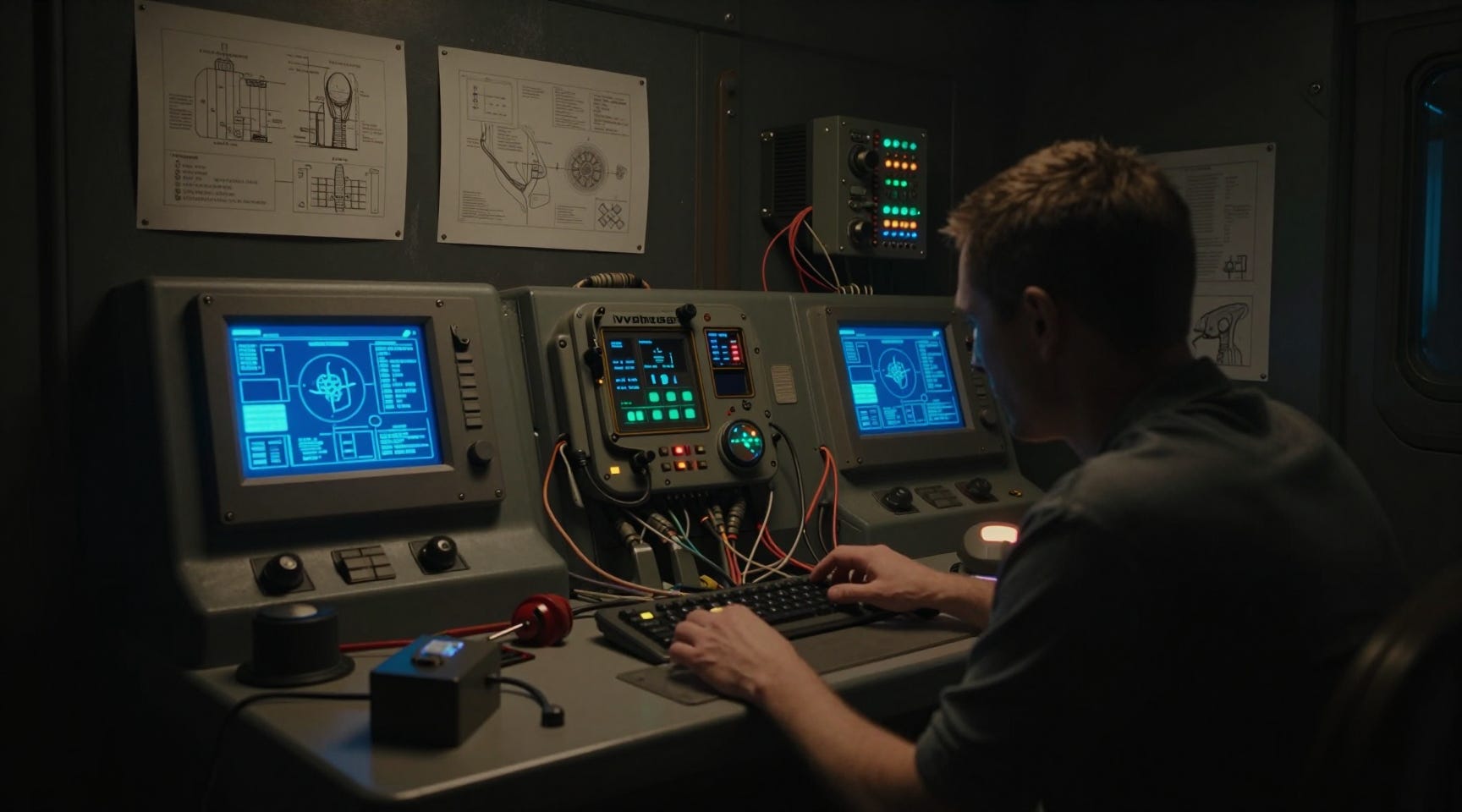
The problem isn’t the equipment. The problem is we’re running Vethrak atmospheric processors with human jury-rigged control systems, powered by salvaged fusion cells that were never designed to interface with alien tech. It’s like trying to run a combustion engine on prayers.
Chen thinks I’m being paranoid. “Diagnostics show green, Declan. Stop looking for problems.” Easy for him to say. He works water reclamation. Water doesn’t care if the control systems speak different languages. Air does.
0620 hours
Fourth failure. Scrubber went offline while I was writing the last entry. Took me forty minutes to bring it back. Hab Seven was at eighteen percent oxygen when the backup kicked in. Eighteen percent. People start losing consciousness at fifteen.
I’m not waiting for a fifth failure. Pulling the entire control interface and rebuilding it from scratch. Chen can write me up if he wants. I’d rather face a review board than explain to forty-two families why their kids suffocated in their sleep.
1145 hours
Found it.
The Vethrak processor uses a feedback loop we don’t have documentation for. Our control system keeps trying to correct what it thinks is drift. The processor responds by throttling output. Our system reads that as a fault and attempts a restart. The processor interprets the restart signal as a shutdown command.
It’s not a malfunction. It’s a translation error. Two systems speaking different languages, both trying to help, both making it worse.
The fix is stupid simple. Disable the automatic correction protocol. Let the Vethrak system handle its own feedback loop. Stop trying to manage what we don’t understand.
I’ve made the modification. Running a twenty-four-hour test cycle before I document the change. If this works, every settlement running hybrid atmospheric systems needs this fix. If it doesn’t work, I’ve just killed the backup safety protocol.
No pressure.
Day 248, 0820 hours
Twenty-two hours. No failures. Oxygen levels stable. The processor is doing exactly what it’s designed to do, once we stopped interfering.
I’m sending this log to Infrastructure Command. Every outpost running Vethrak life support needs to know about this. We’re so focused on making alien tech work the way we think it should work, we’re not letting it work the way it was designed to work.
We’re going to kill people with our assumptions.
1430 hours
Chen came by. Didn’t apologize. Didn’t need to. He just asked me to walk him through the fix. Took notes. Asked good questions. He’s going to implement it in the water reclamation system. Apparently they’ve been fighting similar intermittent failures for weeks.
He stayed after the walkthrough. We talked. First real conversation we’ve had since the migration. He lost his sister in the evacuation. I didn’t know. He thought I was reckless, taking risks with systems that keep people alive. I thought he was cowardly, hiding behind diagnostics instead of solving problems.
We were both wrong. We’re both just trying not to lose anyone else.
Day 249, 0600 hours
Infrastructure Command responded. They want detailed documentation on the modification. Engineering analysis. Risk assessment. Implementation timeline for fleet-wide rollout.
They’re also pulling me off maintenance rotation. Temporary assignment to the Hybrid Systems Integration team. Apparently there are fifty-seven different categories of incompatibility between human and Vethrak technology, and we’ve documented solutions for eleven of them. Someone needs to figure out the other forty-six before we lose more settlements to translation errors.
I told them I’m a maintenance tech, not an engineer. They told me the difference doesn’t matter anymore. Everyone does what needs doing.
I’m keeping this log active. Personal record. Maybe it’ll help someone else figure out the next impossible problem with inadequate tools and borrowed technology.
We’re four years past the end of the world. Still learning how to live in what’s left.
Final Entry, Day 251
Hab Seven scrubber still running. Seventy-two hours without failure. Chen implemented the fix in water reclamation. Two other outposts confirmed similar modifications working on their atmospheric systems.
This is how we survive. One failure at a time. One fix at a time. One day at a time.
Declan Silva, signing off.
Author’s Note: New Perth Outpost, Year 4. The early years after the invasion weren’t just about rebuilding civilization—they were about learning to use salvaged alien technology we barely understood. Declan Silva’s maintenance log captures the frustration, ingenuity, and quiet determination required to keep people alive with jury-rigged systems that were never meant to work together.
This story explores the technical challenges of survival in a post-invasion world, where every system failure could mean lives lost, and every solution required abandoning human assumptions about how things should work.
If you enjoyed this story, you can follow the main story arc in The Exodus Rush, the first book in The Vethrak Requiem series.