


The lines agreed until the load came off.
Wanjiku Bett pinned the peak-load trace beneath the analysis board’s retaining strip. Strain had traveled through Article Four where the design required it. The transition barrel had carried the simulated thrust and bending without announcing a failure in its outline.
She clipped the unloading trace beside it. Near zero, the measured response stopped following the return she had calculated.
Three work packages lay open beneath her wrist. Each ended at a different joint boundary. None contained enough of the barrel to explain the deviation alone.
The replay station could display the saved channels within its reduced-power allowance. It could not give her the full modeling run she would normally use to check the structure’s changing response. She set its view to the same time interval as the actuator record and worked through the channels in small groups. The original sampling remained intact. A coarser display was not permission to throw away detail.
Across the inspection boundary, narrow lamps held Article Four in pieces of light. The actuators were isolated. Beyond the cradle, construction members vanished into the asteroid’s rough wall.
Her restraint pressed across the tops of her boots. She loosened it one notch and checked the first calculation again.
At peak load, the neighboring channels rose together. During unloading, their relationship changed beside the mixed transitions. The shifts crossed the convenient ends of the individual weld records.
She marked the divergence, then brought the acoustic timeline alongside it.
No new test. No actuator movement. The signal came from the proof they had already stopped.
Cho arrived with a slate secured close to his harness.
“What do you need powered?”
“Nothing beyond this allocation. I need the retained fixture dimensions.”
He released the relevant packet to her station, then read the two traces.
“The top of the curve looks right.”
“The return doesn’t.”
She laid a flexible strip across the drawing, following the path from the loading interface through the transition frame. A small correction at one joint changed what the next joint had to return. The barrel could store strain across the connection even while each department’s completion box remained green.
“Could we check it with a smaller cycle?” Cho asked.
He left the question open. No work request accompanied it.
Wanjiku stopped the strip at the first mapped flaw.
“We have cracked flight hardware and a load record we haven’t finished using. Another cycle could extend the damage. It wouldn’t tell us why this treatment and this geometry interacted.”
“A new specimen won’t be the barrel.”
“It must represent the part of the barrel that matters.”
She could not make an offcut carry the history of a structure by giving it the same nominal grade. Their earlier same-row control had answered a narrower question. Today’s test definition would have to retain the mixed boundary and the restraint that made it consequential.
Cho secured himself at the adjoining rail while she worked through the reaction forces by hand. He waited through a correction that moved the boundary beyond the first tempting cut line.
“All three?” he asked.
“All mixed transitions and their common treatment zone. Not every plate in Article Four.”
He opened the stock account rather than the release screen.
Tuva met her on the scaffold with the overlay packet clipped flat against its rail. Wanjiku crossed one restraint at a time, keeping a handhold while she changed tether position. No one touched the isolated actuator controls.
The weld looked serviceable beneath the lamp. That was the trap in a surface repair: a smooth finish would answer the question an eye could ask and leave the structural question underneath.
Tuva registered the first overlay to its photographed reference points. One set of strokes preserved the torch travel. Another followed the plate’s retained layout direction. The crack axes favored the latter.
Wanjiku checked the marks against the ultrasonic positions. She moved to the adjacent same-history joint and opened its examination coverage. Clean within the recorded limits. The corresponding joint beyond the other mixed transition remained clean too.
The evidence did not condemn every piece of steel between them. It also did not let her treat three shallow indications as three unrelated blemishes.
“How much are you taking out?” Tuva asked.
“Nothing today. I’m defining the investigative cutback envelope.”
Wanjiku placed a second removable boundary outside the shared treatment zone. It enclosed space for examining sound material beyond the mapped damage. The outline stayed attached to the drawing and overlay, not issued as a cutting instruction.
“The eventual repair has to reach verified material,” she said. “This is where we investigate that boundary. The scans don’t authorize the torch.”
Tuva compared it with her signed fit-up record.
“The restraint here was opposed. The next joint wasn’t tacked in that order.”
“Keep both in the test definition.”
A shortcut in the mock-up would be easy to defend later. Different stock. Easier grip positions. A shorter thermal hold. Each concession could produce a clean specimen and leave them knowing less than they knew now.
Wanjiku asked Tuva to check the retained offcut identities against the three joint records. The welder opened the links before answering.
Back at the board, Wanjiku drew a curved transition with enough adjoining structure to reproduce the restraint, rather than a flat coupon with a familiar seam.
Samrawit secured the offcut inventory beside it. Both plate rows had retained material linked to their original local identities. Their upstream forming and thermal records were still missing.
“The same unknown history,” Samrawit said.
“The closest retained material, with that limitation written in.”
They matched orientation, thickness and joint shape to the fabrication record. Tuva’s weld sequence and the applied heat treatment stayed attached. Wanjiku added the fixture stiffness, restraint positions and the relationship between axial force and bending that the original actuator program had imposed.
She checked the reaction path through the proposed test fixture. The specimen needed somewhere to put the load besides the joint they hoped to understand.
Cho brought the preliminary fabrication allowance into view.
“That isn’t approved power,” he said.
“No. The definition comes first.”
She left the allocation pending. The test would need a separate containment review, an examination baseline, valid acoustic coverage and predetermined stopping conditions. Its diagnostic stop could permit damage within the contained sacrificial specimen. It would not authorize an open-ended attempt to break whatever remained.
Samrawit indicated the curved section.
“I need this retained after the scan. Both sides.”
Wanjiku added the sectioning positions to the disposition plan. The test piece could give them something Article Four could not safely supply: a damaged transition they were allowed to cut open after comparing its before and after examinations.
A reproduction would narrow the cause. It would not recover the missing process history or qualify a repair by itself.
She kept that sentence in the acceptance conditions.
Cho reviewed the material requirement, then acknowledged the definition for planning. No actuator permission appeared. No release condition disappeared.
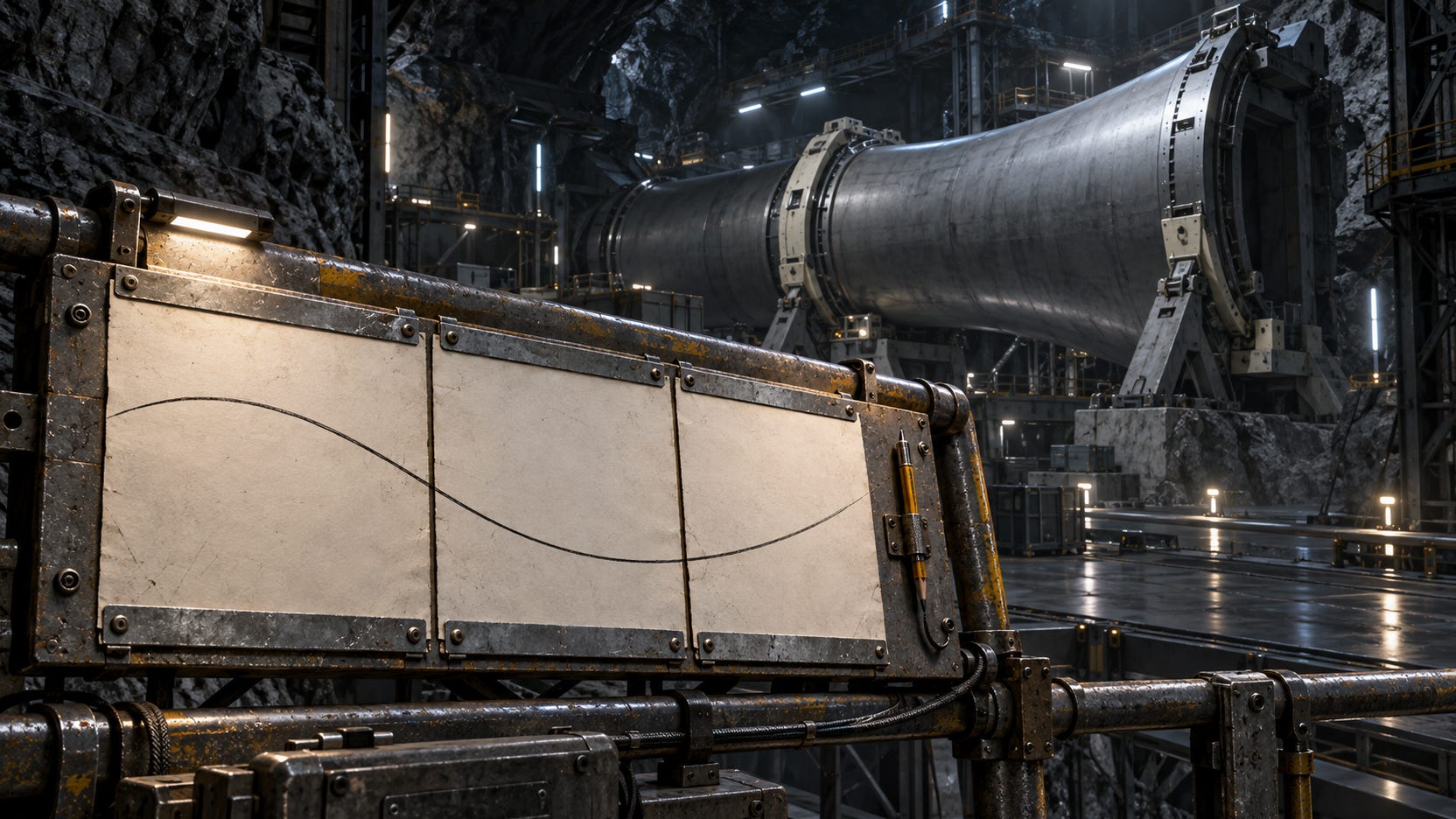
Wanjiku returned to the three work packages. She fastened their drawings edge to edge beneath the board’s retaining strips and aligned the physical reference marks.
The first package ended at the weld. The next began there. On the third sheet, the same connection changed administrative owner again.
She drew one continuous load path across all three and left her pencil clipped beside the point where it crossed the last border.
Author’s note: This story continues the Site Anvil arc in late Year 3, inside the same bounded dark-state window. Wanjiku Bett must define a useful test without making the damaged flight structure pay for another question.
New to The Vethrak Requiem? Start with The Exodus Rush, Book 1, where humanity fights for survival after an alien invasion using technology it barely understands. These short stories explore the wider universe; the novel begins the main story.