


Kavita Nair stopped the manifest at the first line without a receiving signature.
Food concentrates, family distribution: receiver confirmed. Medicine, station clinic: temperature record complete, seal intact. Scrubber media, habitat stores: replacement schedule attached. She marked each for passage through the cargo hub and kept her thumb off the approval box for the load beneath them.
Two pallets of refined nickel. Pressure-shell fabrication. Strategic essential.
Destination restricted. Delivery deadline blank.
She hooked one boot under the logistics desk’s restraint bar and pulled the manifest closer. On the fourth day of the strike, somebody still expected a category to do the work of an address.
The cargo dispatcher waited across the rail. His slate remained clipped to his chest, the release request open.
“Separate the first three lines,” she said.
“It’s one handling order.”
“Then make two.”
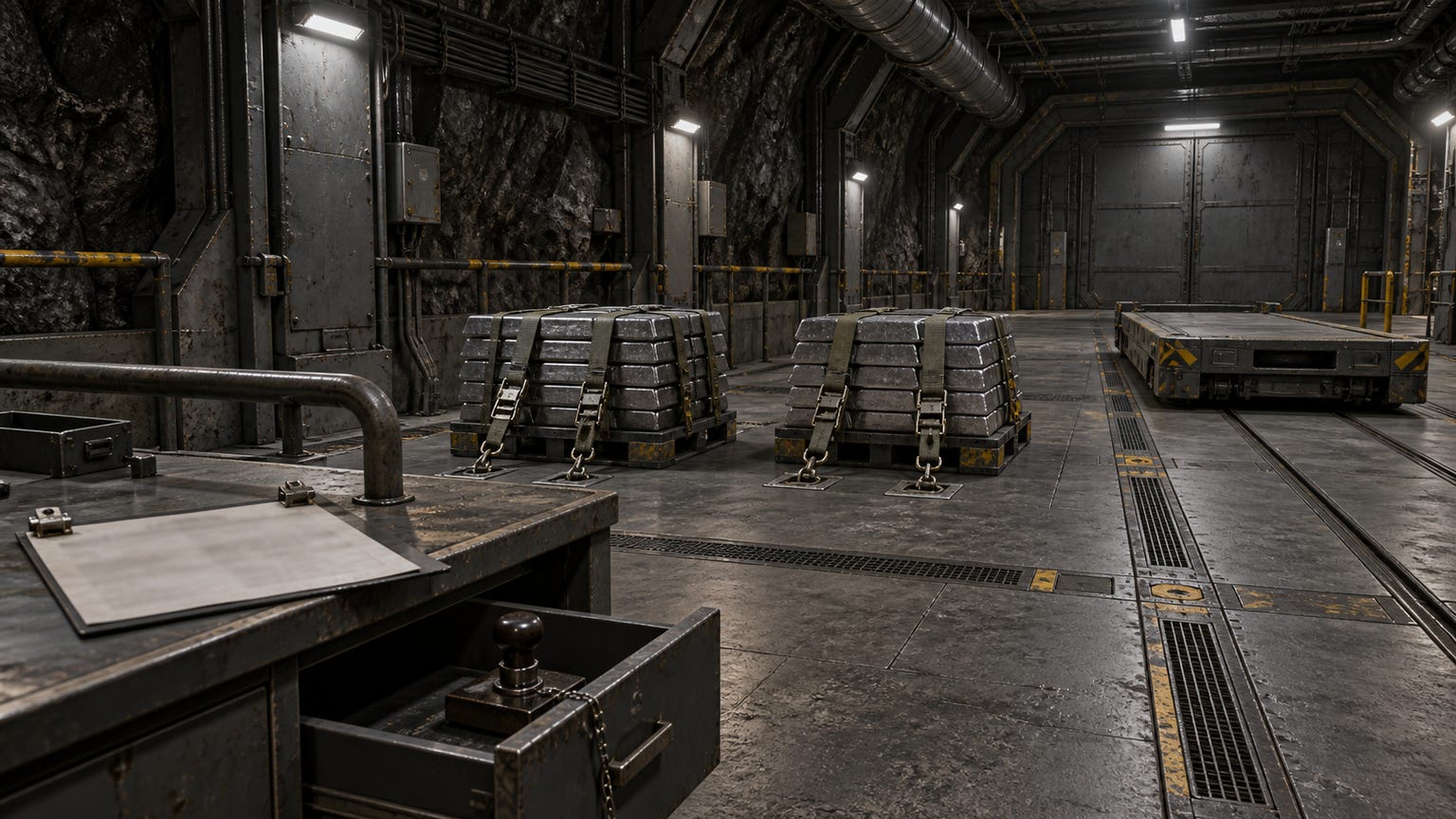
Behind him, straps crossed the nickel bundles in broad, flat bands. Nobody had loosened them. A pallet in Ceres gravity could seem easy until its mass carried a hand into a brace. She checked the nearest ratchet out of habit. Teeth seated, tail secured, no twist at the edge protector.
The dispatcher followed her hand.
“The stock is already refined. You aren’t being asked to restart a face.”
“Stored stock has been leaving under the existing dispatch arrangements. This asks for an emergency crew on a different route. What is the emergency?”
“Pressure shells.”
“Where? When?”
He touched the two empty fields without opening them.
She sent back the nickel line for clarification and released the other three. A loading hand caught the medicine carrier’s tether, checked its seal against the slate, and eased it toward the marked passage. The cold-chain indicator stayed green.
The family supply queue ran along a handrail outside the cargo hub. Bags clipped to belts. Boots locked to floor strips. People left spaces for the loaders returning empty carriers, the same gaps Kavita had marked before the first shift came off the faces.
A miner caught her sleeve as she moved past.
“Can you check this?”
He turned a household slate toward her, shielding it from the queue with his shoulder. The balance showed thirty-six credits. Under it, the daily food charge showed twelve.
Kavita clipped her tether to the rail beside him. She had helped post the strike-fund notice that morning. A pooled balance, a daily allocation, a line for contributions not yet cleared. Here was the other end of it, held close enough that she could read the crack across his screen.
“How long?” he said.
“Eleven more daily allocations at the present rate. Today’s is covered separately.”
“The transfer from the other chapters?”
“Promised. Not received. The eleven doesn’t count it.”
He dragged a thumb along the crack. “My partner’s hours went with the mill schedule. We planned for one wage stopping.”
Kavita opened the household register. His second-income field still showed active.
“Get the reduced-hours notice to this desk. We can review your allocation today.”
“Will that come out of somebody else’s?”
“It comes out of the same fund. The next forecast will show the change.”
He nodded once and pulled the slate back. No reassurance would add a credit to it.
A food carrier passed between them and the opposite rail. The miner caught its trailing guide loop before it could snag a bag, fed it through, and let go.
“I’m on the line after this,” he said.
“I have your shift.”
He returned to the queue. Kavita stayed clipped in long enough to send the correction request, then worked back toward the nickel.
Two chapter members waited at the logistics desk. The tunnel steward had the strike carve-out open. Beside her, a habitat fitter held a folded pressure-shell drawing against the rail with one glove.
“We passed food,” the steward said. “Nobody voted to pass ore.”
“That metal becomes a wall,” the fitter said. “A leaking habitat doesn’t care whether we call the wall construction.”
“Every frame in the belt becomes somebody’s survival if you follow the paperwork far enough. That’s how they kept us under 3-Bravo.”
Kavita secured her boots at the desk. The fitter smoothed the drawing’s corner against his glove.
“I’m not asking anybody to go under it again,” he said. “I’m asking what happens if this is a replacement shell and people are waiting behind a temporary patch.”
The two pallets lay beyond his shoulder. Their packing bands bore handling scars from before the stoppage. Work already done. Material already paid for in shifts nobody could return.
“We need to know that,” Kavita said.
“They won’t name a restricted yard.”
“They can identify it to someone cleared to verify the use. We need a destination that can be checked, a deadline, and a life-safety finding. We don’t need its name on the public board.”
She opened a new proposal rather than altering the rejection. The first record needed to remain visible.
Sealed transit. A Helios custodian and a union custodian. Release against an independent reviewer’s confirmation of immediate life-safety use at the receiving site. No diversion. Receipt matched to the original seals. No precedent for extraction, production maintenance, or any subsequent cargo request.
She turned the slate for both members to read.
The steward pressed a finger against the final condition. “Each load separately.”
“Each load separately,” Kavita said.
The fitter nodded. “Send it.”
The Helios dispatch manager answered on the cargo channel while scrubber cartridges moved through the checkpoint. Kavita kept the channel audible at the desk.
“The essential designation comes from the allocation office,” the manager said. “You have the certification.”
“I have a label. Can your office arrange independent verification?”
“Our receiving contracts don’t provide outside access.”
“A cleared reviewer. The union copy can omit the location.”
“We cannot make acceptance of an authorized allocation conditional on a third party.”
Kavita rested her palm against the desk edge. Years of gloves had polished a crescent in its paint. Once, she had signed whatever reached this point with the upstream approvals attached. Her job had been to make the straps match the manifest and the manifest match the carrier.
“The food, medicine, and scrubber media are moving,” she said. “The nickel is available for sealed transit under the conditions on your screen.”
“Refusal will go to Fleet Construction.”
“Include the offer with it.”
She requested acknowledgment. It arrived without an acceptance of the review condition.
The fitter folded his drawing along its old creases. He had not withdrawn his objection. She entered it beside the steward’s, with the transit proposal between them.
Past the desk, the last food carrier cleared the checkpoint. Its emptied guide loop came back along the return rail. Medicine had reached the clinic. Habitat stores confirmed the cartridge seals. The nickel stayed strapped to the floor, its route unresolved.
Kavita printed the hold notice and slid it beneath the desk clips. Cargo number. Two pallets. Verification required. Her name in the decision field.
Her old cargo stamp hung inside the drawer on a short cord. Helios had paid her to use it on damaged loads, mismatched seals, destinations nobody had bothered to confirm. The handle fitted the hollow beneath her thumb.
She braced the paper with her other hand and pressed the stamp onto the nickel’s hold notice.
If you enjoyed this story, you can follow the main story arc in The Exodus Rush, the first book in The Vethrak Requiem series.